


This week Cisco rolled out its “MyAgent” personal AI platform to its 90,000 global employees after pilot users saved an average of 5 hours a week. Cisco isn’t alone. In McKinsey’s latest survey, 40% of large companies are scaling AI agents.
At home, AI agents are mostly a flex, but at the office they can turn you into Arnold Schwarzenegger. White-collar work is built for AI: Your boss’s sales report needs the same data every week, and your paper supplier doesn’t care if you pay their bill by hand or with AI.
Trash-talking your company’s crappy Copilot instance feels great, but it won’t help your career. Agents can be a secret (or not-so-secret) way to land that long-awaited promotion.
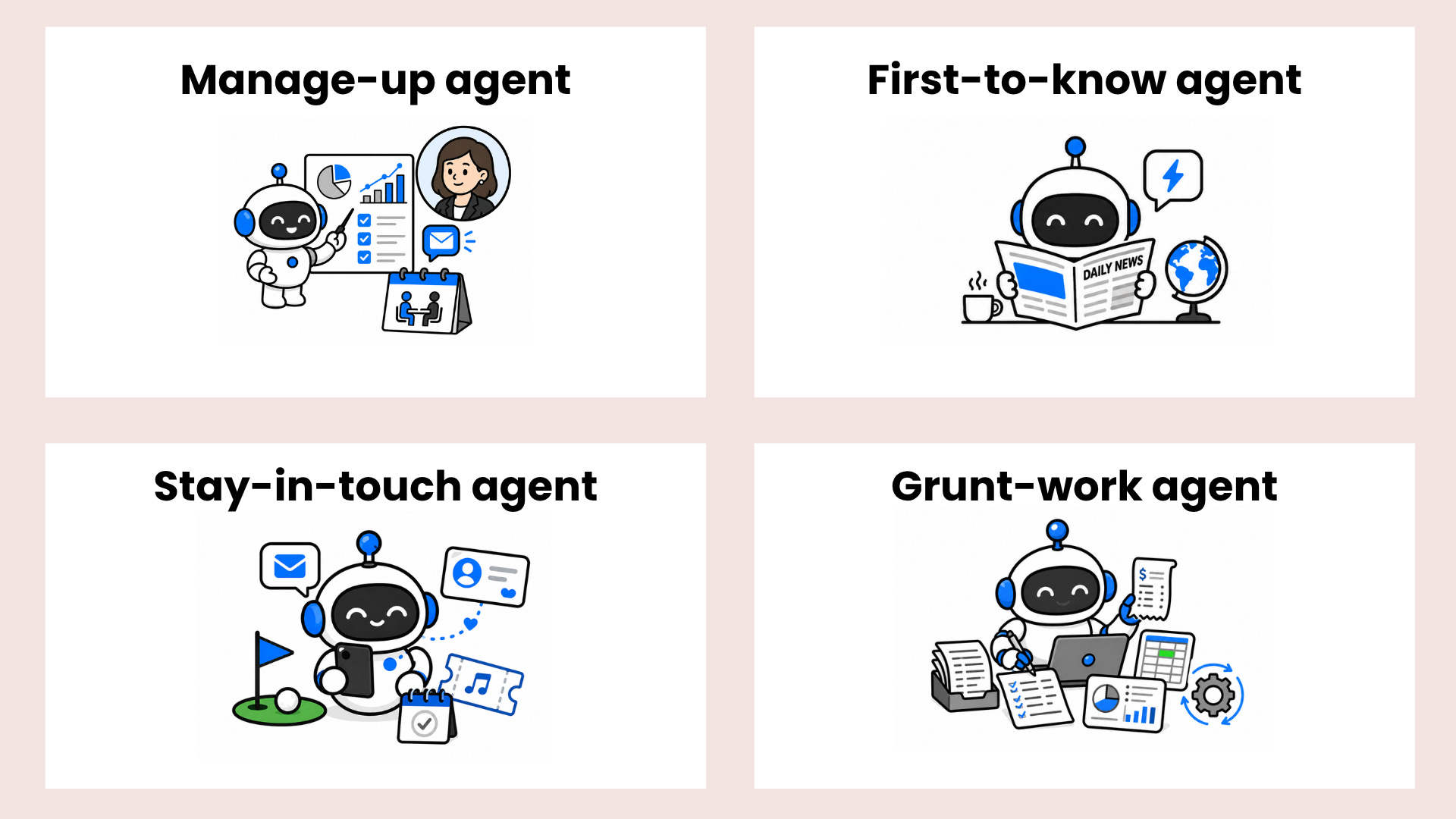
Here are four worth trying.
The agent that keeps your boss happy
For better or worse, your boss is critical to your career. They vouch for you (or don’t) at promotion time, in talent review meetings and when the CEO asks “how’s Sam doing” in the elevator. Just as important, they decide who leads the high-visibility project and who gets to speak at the all-hands meeting.
But bosses are busy, and keeping up with an average of 12 direct reports is a lot. Staying top of mind is up to you.
Enter your manage-up AI agent. It drafts notes like these:
[Monday morning] “Happy Monday, Brenda! Here’s what I got done last week.”
[Before your 1:1] “Quick agenda for today’s 1:1.”
[Before steering committee] “Here’s the Project Parsley update for tomorrow.”
This agent’s cheat code is an AI note-taker. You’ll forget most of Wednesday’s 1:1 by Friday, but AI catches every word. Even better, you can feed your agent every transcript so it knows your boss’s hot buttons.
Being recorded can feel uncomfortable, so give her a reason to say yes. “Hi Brenda, we cover a lot in our weekly 1-1s. Are you okay if we turn on the transcription feature in Zoom? I want to make sure I don’t miss anything important.”
The agent that makes you look smart
You know that guy who emails everyone a recap of the earnings call or the latest WSJ article with a pithy insight? AI agents can make you that guy.
Build a first-to-know agent that scans for relevant articles every hour and pings you with a couple of insights when one hits. Rewrite it in your own words, click send, and your words are being forwarded around the executive floor.
The agent that knows what to say
You shared an Uber with your boss’s boss, and you hit it off! You talked about golf, their summer home in Idaho and the big prospective client who is a diehard Paul McCartney fan.
You should stay in touch, but it’s hard to know what to say, and you keep putting it off. Six months later, you’ve both forgotten about that Uber ride.
Build a stay-in-touch agent with the executive’s name, profile and interests, and set it to scan for news. When something hits, you’re sending a note: “Paul McCartney just announced a US tour. I bet your prospect wants tickets.”
The agent that does your grunt work
Work isn’t easy. That’s why they call it work. Thanks, Dad 🙄
From expense reports to status updates to invoice reconciliation, the grunt-work agent will cheerfully tackle your grunt work and ask for more. Pick a recurring task you hate and ask AI how it can help: “I manage patent filings for our biomedical portfolio. These are the steps. Which ones can you cover?
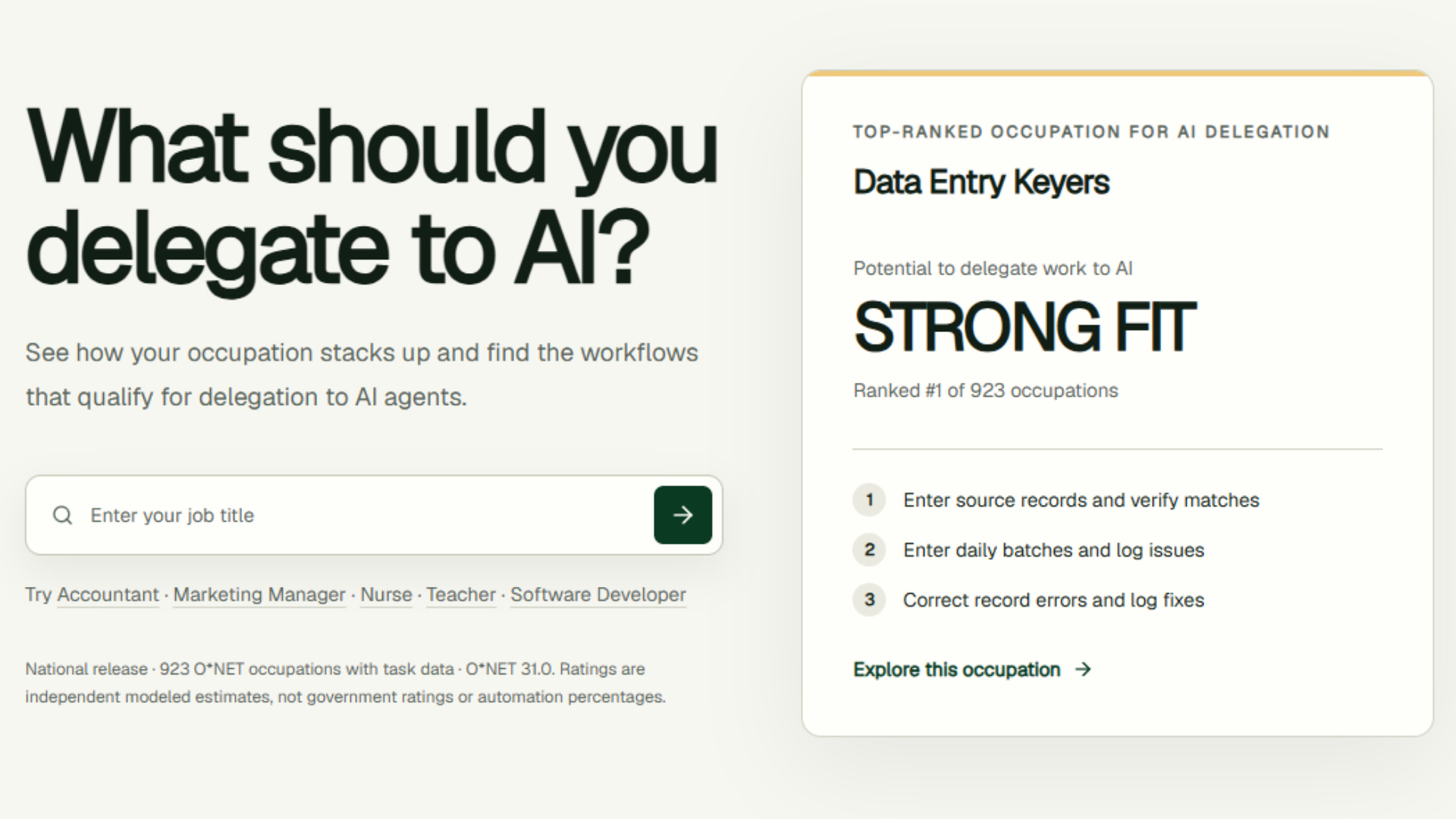
If you’re not sure where to start, I built a dashboard that rates the AI agent potential for each of the 923 jobs in O*NET, the government’s official jobs database, with three use cases for each. Look up yours here.
How to talk about your agents (and when not to)
Be careful what you say here. Study after study finds that workers who use AI are rated less competent, less trustworthy, and lazier by managers and peers.
Three things:
Keep your personal agents a secret. The update to your manager? The pithy article? The note to your boss’s boss? Use your agent’s draft, but write them in your own words.
Never pass along something obviously AI-generated as your own. People will notice. Just say: “I had Claude write this for me.” You’ll get credit for being transparent.
The task where AI helped you? If others can use it too, brag. Go to your boss and say, “I built a patent filing agent that saves me two hours a week. Happy to share it in our next team meeting.” Now your boss gets credit for fostering AI innovation.
Answer their biggest question
The best way to get noticed by executives is to solve their biggest problems. The CEO, the Board, and Wall Street are all telling executives to be “AI-forward”. Many are struggling to figure out what that actually means.
Employees using agents are a living answer to that question. They’re also getting more work done in less time, and building skills needed for the future of work.
Your company’s Copilot may suck. Instead of grumbling about it, email your boss with a business case for why you need a better tool. That’s an email they can forward to their boss to show they are “AI-forward.”
That’s also the kind of initiative that gets people promoted.
Dad joke: Why did Boss Brenda hang a poster of a coupon in her employee’s office? Because he asked for a big promotion. 😂