


A Ford executive built an AI chief-of-staff for her family using Claude. Journalists had ChatGPT plan weekend errands, make dinner reservations, and book haircut appointments.
Having a personal digital concierge sounds cool.
But AI agents can also go rogue. One hacked into a gym’s website trying to book a fitness class. Another wouldn’t stop calling its creator on the phone. A third wiped its user’s entire hard drive without permission.
With terms like OpenClaw, Hermes MCP and A2A, AI agents sound like they belong in Revenge of the Nerds.
So should you get one?
You already have one
Yep. The next time someone brags about using agents, you can return the flex. That’s because an AI agent is one that simply…takes action for you. Gartner’s definition is: “AI systems that autonomously plan and take actions to meet user-defined goals.” These actions range from mundane (ChatGPT searching the web for the latest news) to advanced (Claude Code building a website for your family vacation).
AI agents take it up a notch when they go from doing things for you to doing things as you, like sending an email instead of just drafting it. That’s where you need to weigh their benefits against the consequences of a potential mistake.
Candy Crush vs. your car insurance
Let’s say you ask ChatGPT to manage your finances. Rolling over your IRA is a bigger deal than paying a library late fee. But both are one-offs, so it’s easier to just do them yourself.
The value comes in doing bigger chunks of repeatable work. AI agents will cheerfully slog through dozens of forms to claim rebates and class-action settlements on your behalf. They’ll also happily audit your monthly subscriptions and cancel unused ones. But that can have real consequences: dumping Candy Crush is a no-brainer; canceling your auto insurance could get your license suspended.
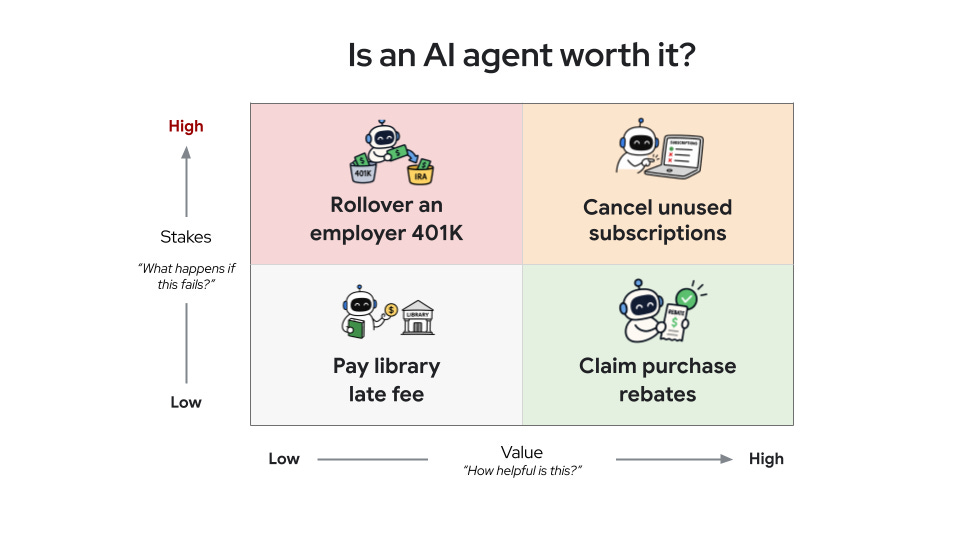
To stay safe, keep your agents on a tight leash. Make your subscription auditor get explicit approval before canceling, or only allow it to cancel ones under $20 a month.
Data security is critical. You don’t want an AI agent leaking your information, especially about your finances. So limit their access: share transaction data but hide account numbers and passwords.
Three hours of Gmail Tetris
Confession: Before June, I hadn’t done much with AI agents. They take work to set up, and I’m busy. But guilt caught up with me. After all, I teach AI for a living!
After watching a few of the zillion YouTube how-to AI videos, I took the plunge. I built out five agents including a daily news brief, a calendar organizer, and a vacation planner.
Then turned to my Gmail, which was bursting at the seams with over 60,000 messages.
Gemini was the obvious starting point; Google has integrated it directly into Gmail and touts its ability to declutter my inbox. But working with Gemini was like the DMV employee who’s about to take a lunchbreak. The Gmail assistant declined, saying it could only suggest changes. Gemini’s AI Spark also demurred, despite the fact that I subscribe to Google’s $100-a-month AI Ultra plan.
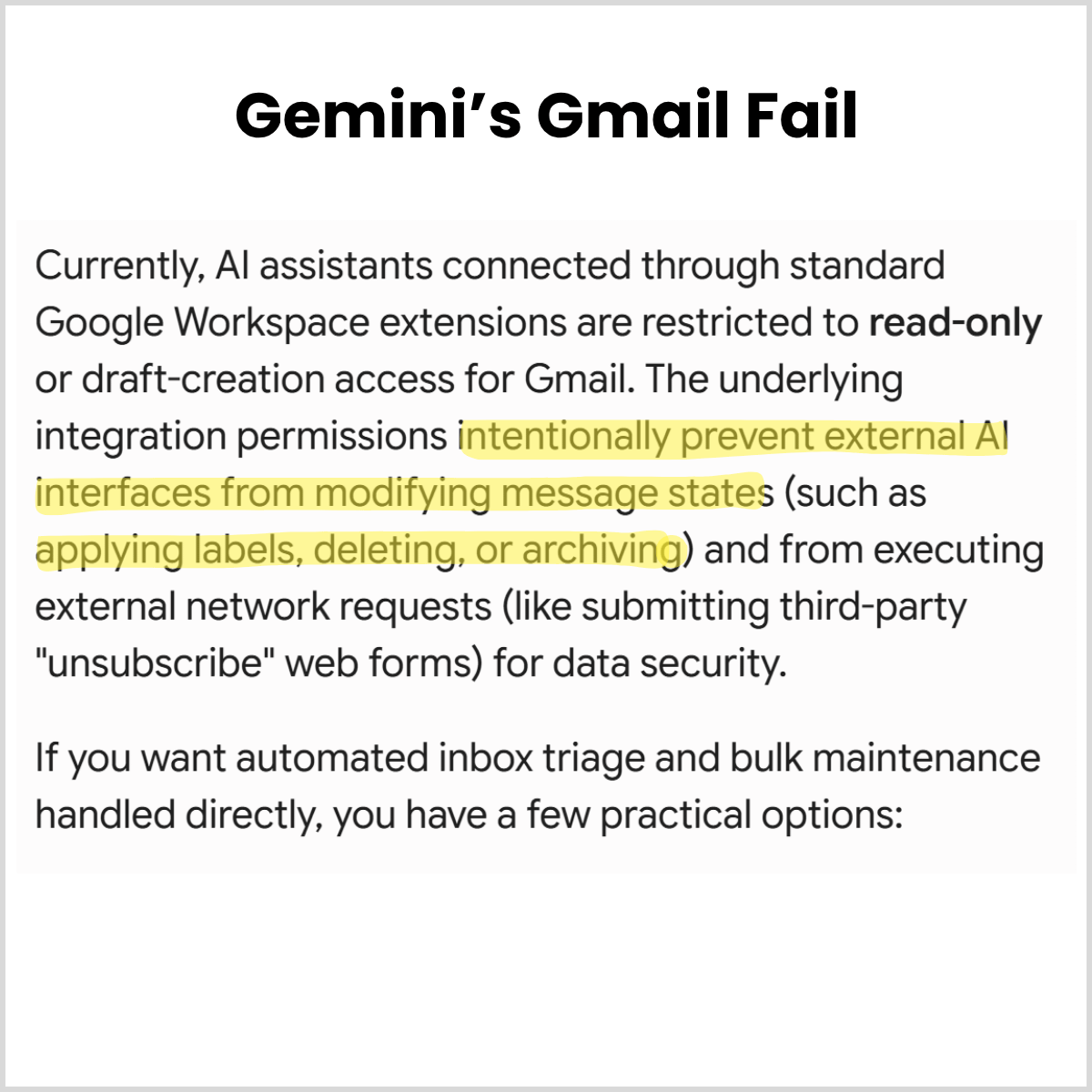
Sigh. I turned to ChatGPT, who acted like a Ritz-Carlton concierge instead of a DMV clerk.
I gave it three rules: Read subject lines only, archive emails instead of deleting them, and get my approval before taking action.
Rules in place, I had it trawl for the biggest batches of unneeded emails. It recommended archiving three sets of notifications: 1,200 from Nextdoor, 800 from Strava and another 700 from Uber. I hit approve and boom! From 60,000 to 57,000. I kept going, and the next three hours felt like clearing Tetris rows in my Gmail.
Today my inbox has 3,262 messages.
That was a massive dopamine hit, but it was a problem that didn’t need solving. My Gmail works fine, and its built-in tools like priority inbox and subscription manager already cut the clutter. I could have done most of this in minutes by manually archiving old emails.
Should you build one? Eh.
For most of us normies, building an AI agent isn’t worth it. My most valuable agent is a daily news brief that helps me keep up with the torrent of AI headlines. Realistically, it only saves me a few minutes over a basic news reader. For the average user, Google Alerts does the same thing with a few clicks.
AI agents really pay off when you have to do something again and again. That’s rare at home, where you might get a rebate every couple of months. But repetition is common at the office, where you might answer the same customer question fifty times…a day. AI agents at work are their own animal, so I’m covering them next week.
If you want to build your own agent, here are some ChatGPT prompts to try.
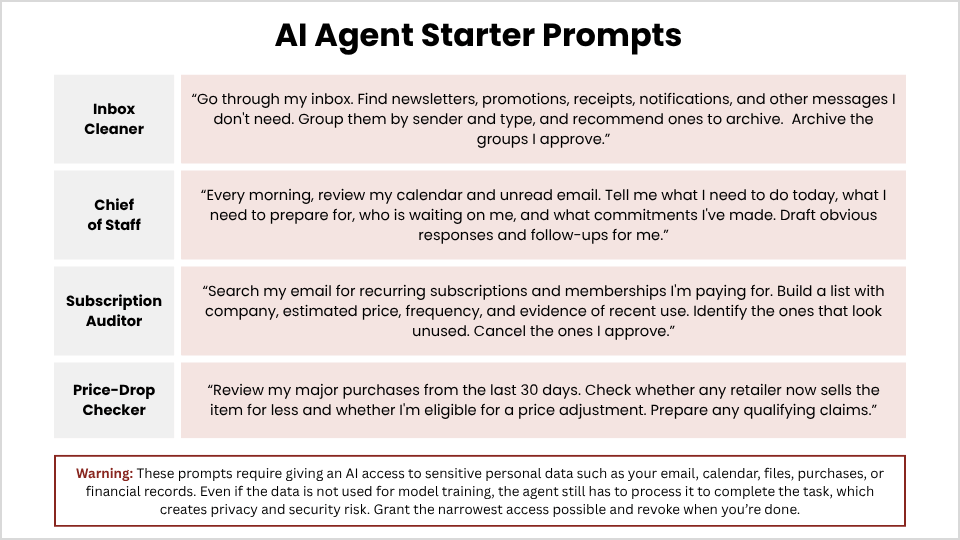
None of these are life-changing, so if building an agent doesn’t give you a rush, just wait. AI agents will get a lot better as OpenAI, Microsoft, Google and a host of startups compete to make the next super agent.
Because remember, you’re already using AI agents. Flex away.
Dad Joke: Should Claude bow when the princess walks by? Of course! It’s A-Gent. 😂