

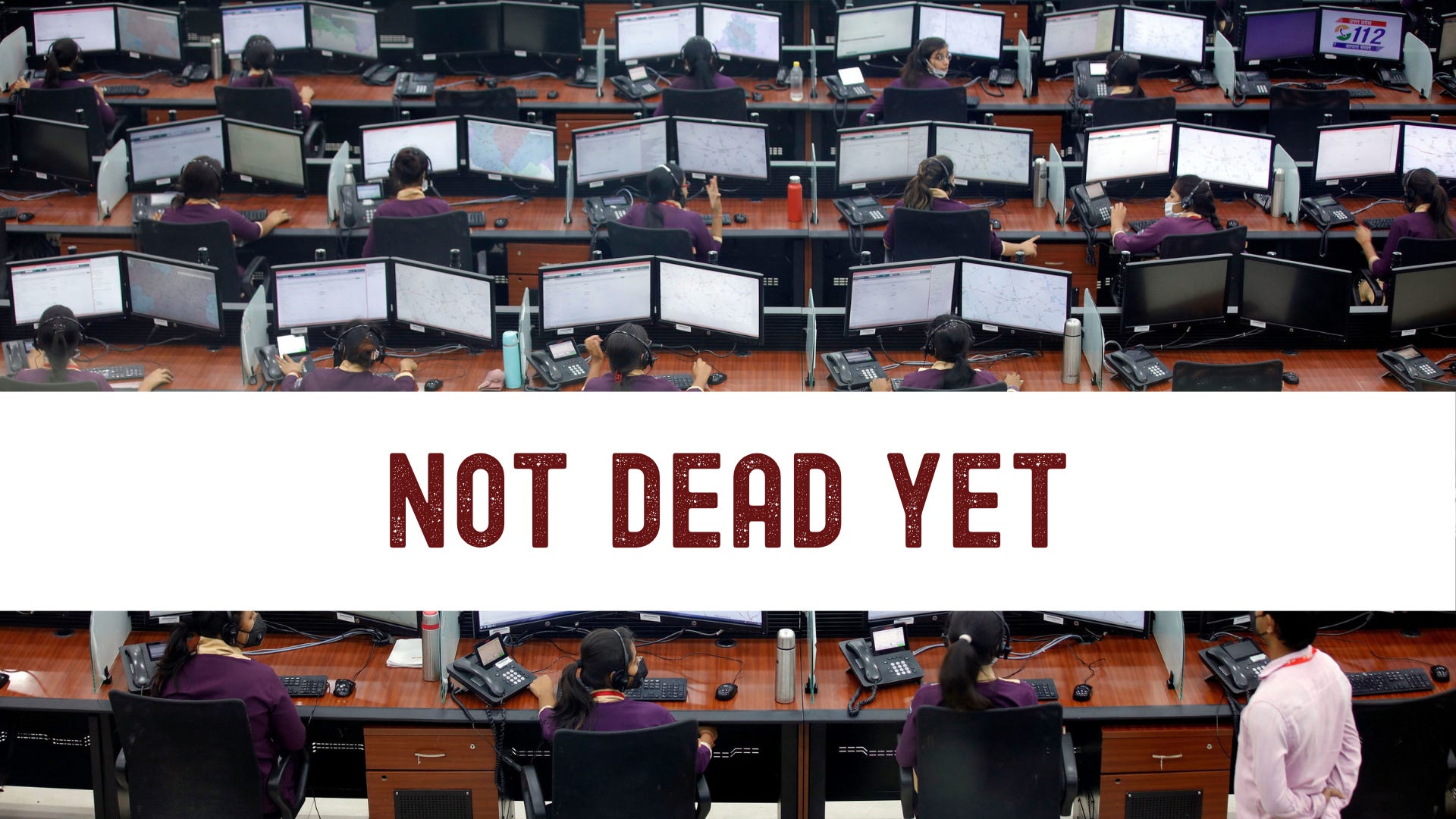
AI is killing call center jobs. Except now it isn’t.
Call center jobs are a perfect target for AI agents. Most reps work remotely and follow prewritten scripts. Conversations are recorded, creating a goldmine for model training. In 2023 Forrester predicted that 49% of customer service jobs would “disappear” by 2030.
Recent headlines tell a different story. Customer service job listings are outpacing the rest of the market this year, and call center employment in the Philippines continues growing steadily.
As satisfying as it is to see AI job doomers foiled, this is only a small uptick. Openings are down significantly from their 2022 peak and the Bureau of Labor Statistics projects a 5% drop in jobs over the next ten years.
This is confusing, because two winds are blowing in opposite directions. AI is automating the easy parts of the job, but it’s also driving growth in the messy parts that require humans. The impact on employment hinges on which grows faster.
AI is taking the easy calls
“Representative,” “Representative,” “REPRESENTATIVE.”
Calling customer service is universally frustrating. You navigate a maze of menus, thumb your details into a keypad three times, then repeat them to the human you eventually reach. Many consumers would rather just do it themselves.
Checking a balance, choosing an airplane seat, rescheduling a delivery are all faster to do online.
AI chatbots expand self-service. They’re always available, even at 2am on Friday or Christmas Eve. And for embarrassing issues like diarrhea or skin problems, consumers prefer chatbots to a human who might ask uncomfortable questions or judge them.
Self-service and live chat are growing, and on track to become the top channels by next year. But this shift hasn’t reduced calls.
Only 14% of self-service interactions actually resolve the issue, and call volume has risen steadily since 2020. Meanwhile, for the reps answering the phone, the easy work is gone, leaving only the hard stuff.
…and making the hard ones harder
Call centers are using AI, but callers are using it too, and that’s making reps’ work harder.
The WSJ recently ran a piece called “Why You Should Let AI Write Your Next Customer Complaint.” AI-assisted complaints are 7% more likely to succeed. AI complaint stories often go viral, like the woman who used ChatGPT to write a ‘polite but firm’ email about a six-hour flight delay.
AI is helping the bad guys too. Complaints to the Consumer Financial Protection Bureau have doubled every year since 2022, driven heavily by “FinTok” influencers who sell templates promising to scrub credit incidents or make money through mini-settlements. Creditors are required by law to respond to each complaint within 15 days regardless of its merit.
Scammers are going further, using AI to file for fraudulent refunds with faked photos of damaged merchandise or food delivery. The images are often indistinguishable from real damage and require human investigation.
The result is a pile of messy issues: ambiguous, often emotional, requiring judgment instead of a script. Experienced reps are the ones who clean them up.
Remember bank tellers?
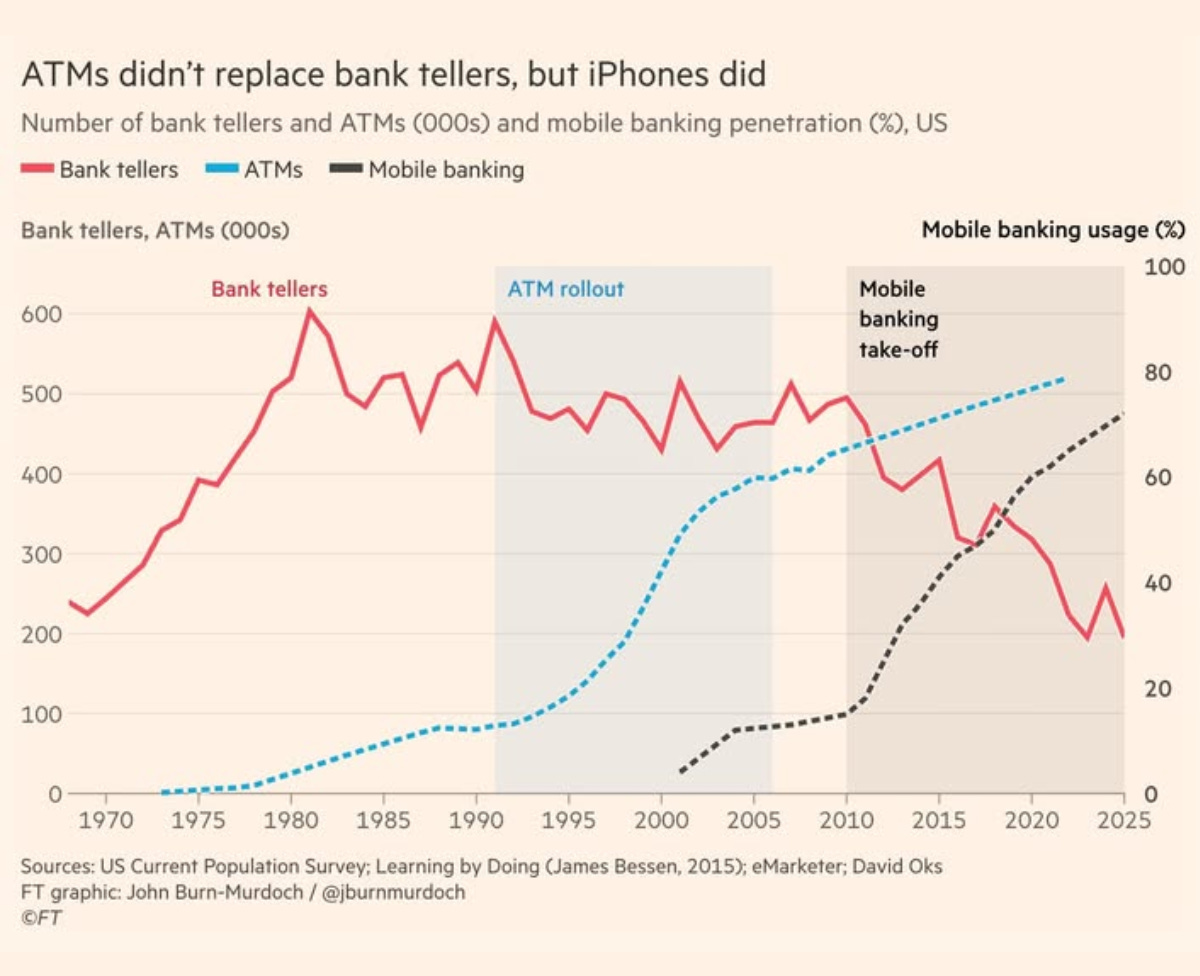
Despite literally being named “Automated Teller Machines,” ATMs didn’t reduce bank teller employment. ATMs handled cash and balance transfers, but tellers were still needed for everything else: opening and closing accounts, deposits, business transactions.
But then the iPhone came along. Mobile banking was a supercharged ATM in your pocket, and it made the branch optional for many. Consumers could deposit checks, make payments and handle their banking whenever and wherever they were.
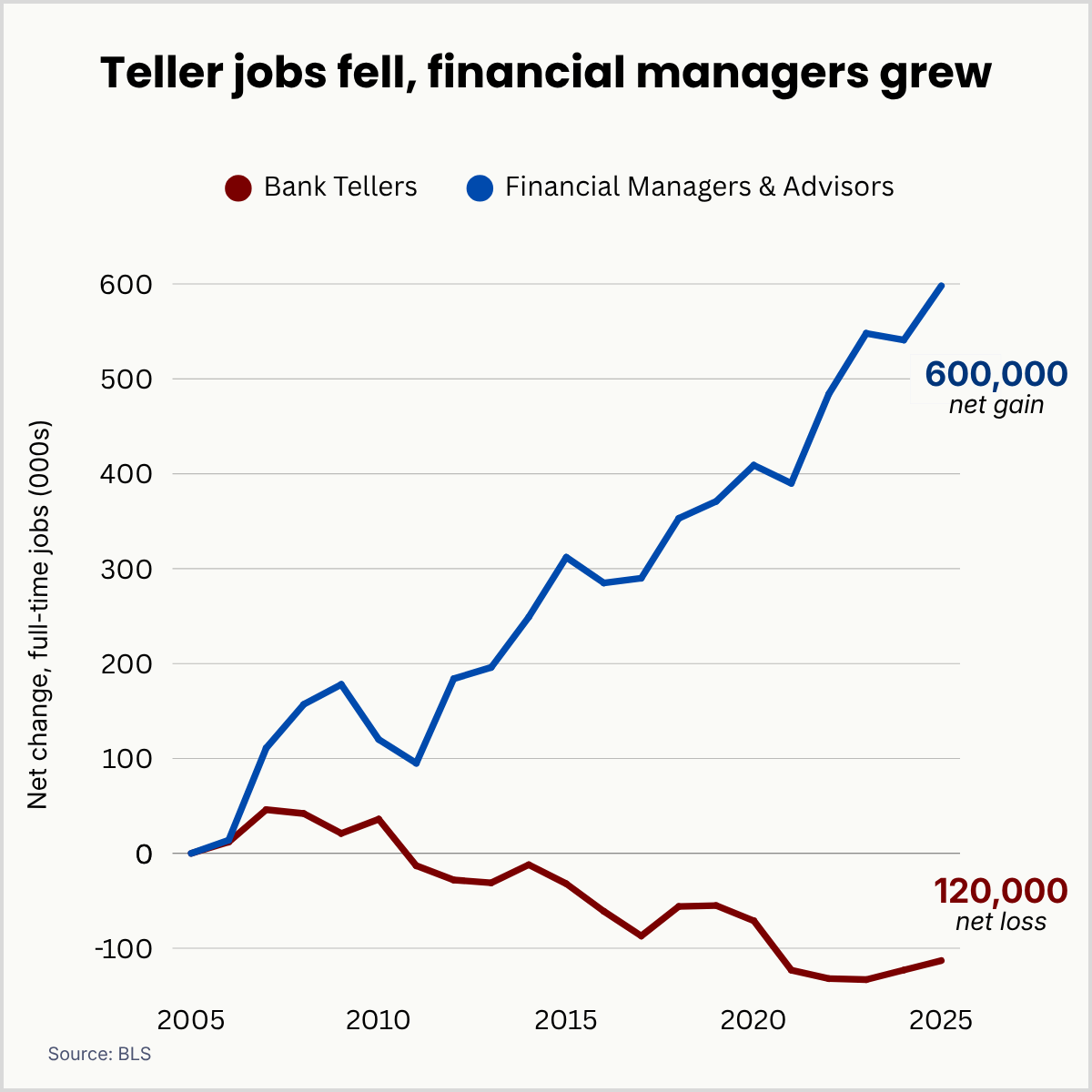
Since the iPhone launched, America has shed half of its full-time teller jobs.
Today’s AI agents are the ATM: good at simple things, useless for messy ones. The only question is when they become the iPhone.
What we know, what we don’t
Today’s dire predictions look like noise. Only 20% of companies surveyed by Gartner reduced call center staffing due to AI, and more than half kept levels stable while absorbing extra demand.
The ROI on AI agents is also unclear. Goldman Sachs found that AI call center agents were more expensive than humans because they burn computing power for the entire call.
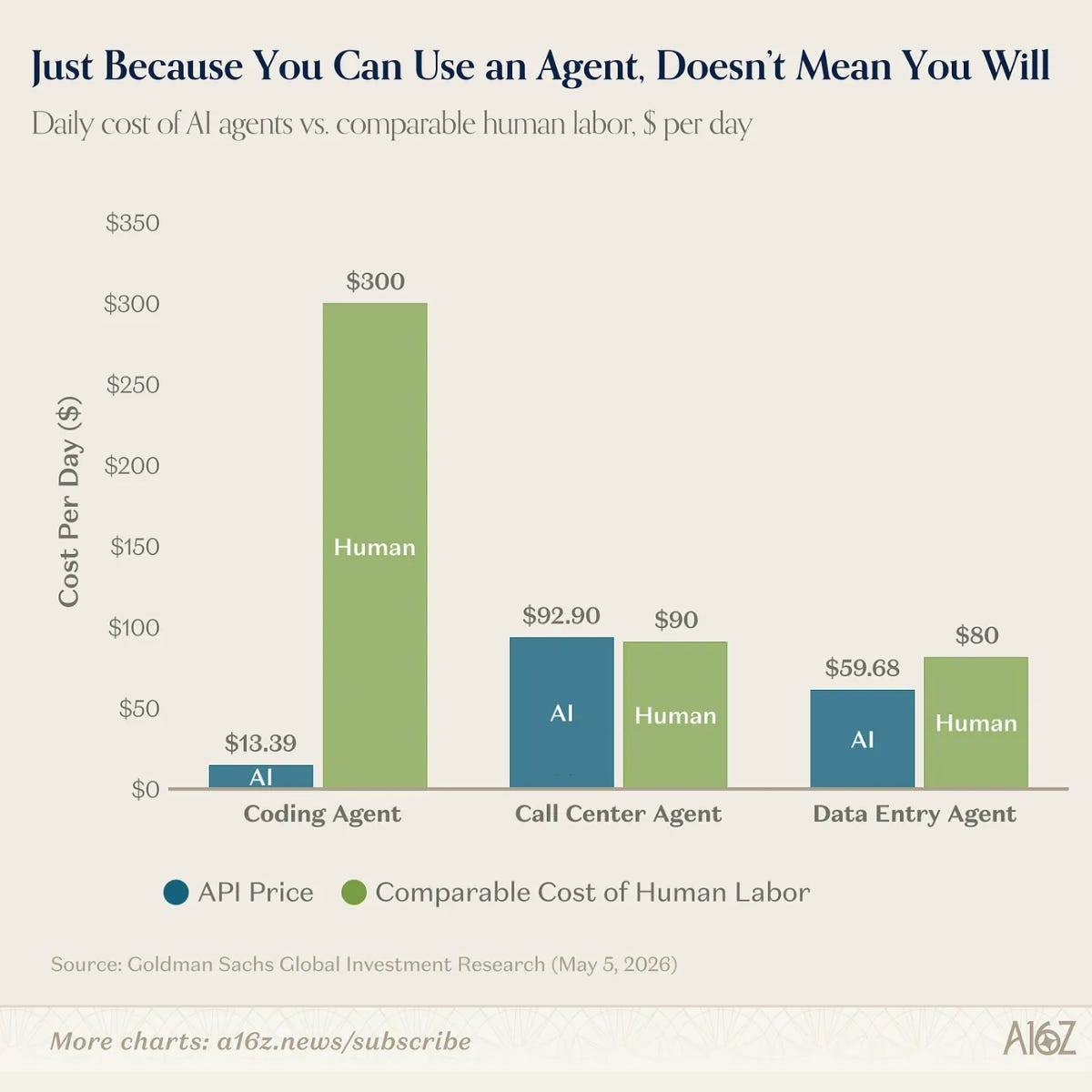
The forecast is clear: expect more self-service, more AI, and more messy issues. And AI will get cheaper.
Call center leaders’ mandate is also clear: deploy AI and fight to keep the talent who can handle FinTok, scammers, and customers fed up with self-service.
Employees face a harder question.
The bank teller story has a second act. Teller jobs dropped by 120,000 after the iPhone launched, but the economy added 600,000 financial manager and advisor positions during the same period. Those jobs are more complicated, and they pay over four times as much.
Former tellers weren’t handed those jobs by default. The ones who got them saw it coming, earned their CFP licenses and persuaded someone to give them a chance.
Call center employees should build skills that make companies fight for them: judgment, emotional range, and the patience to go toe-to-toe with the scammers.
But the ones who succeed in the long run won’t be the ones who keep their heads down. They’ll be the ones who see what’s coming and grab it.
Dad Joke: Did you hear about the framed call center agent? Just a rep with a bad rap. 😆