In the early 2000s, shopping on Amazon was delightful. It had great products, an easy-to-use website, and reviews from other buyers. Prime members got two-day shipping for free.
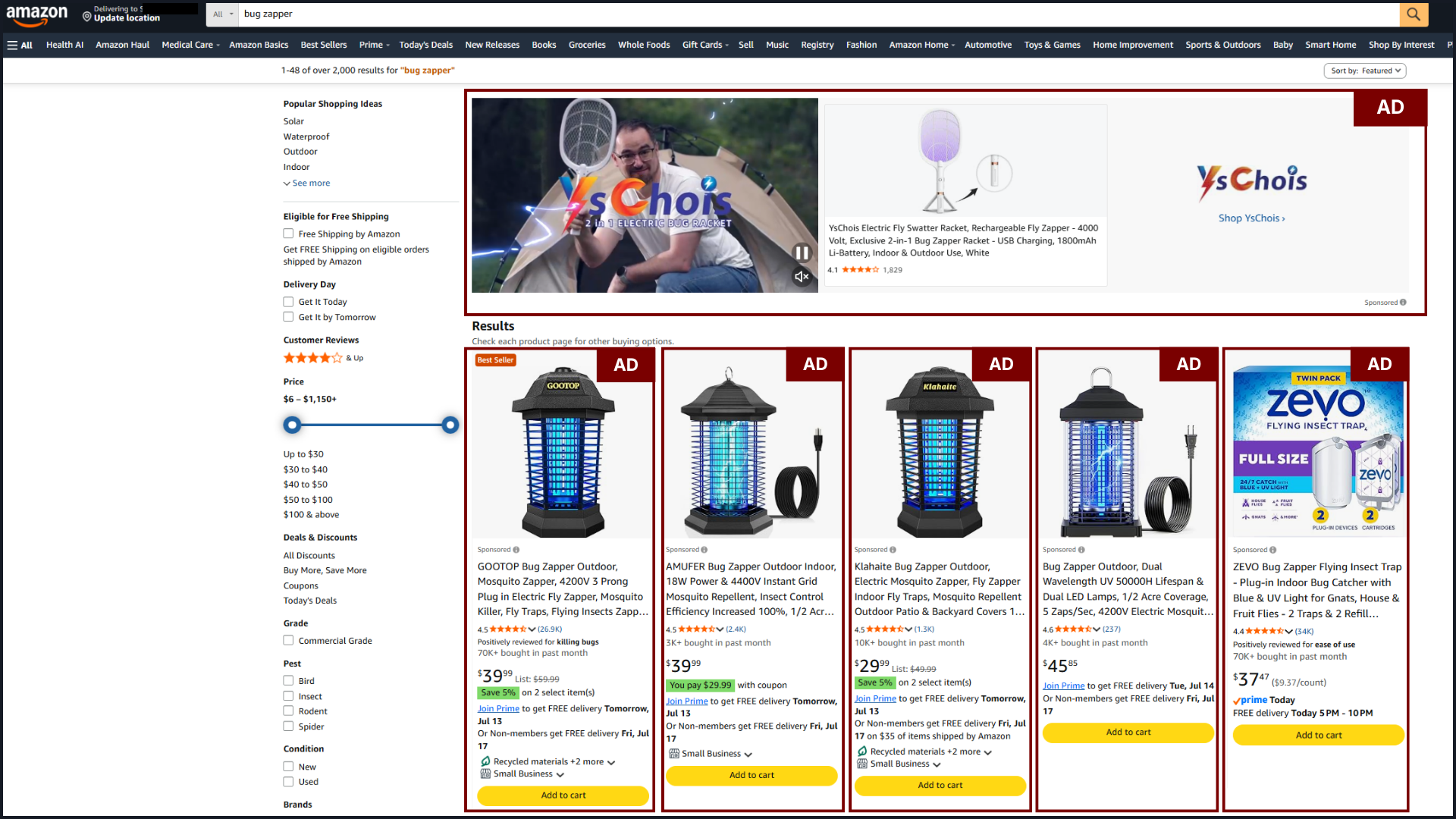
Today, Amazon is plastered with ads from companies you’ve never heard of and it’s hard to tell which reviews come from humans or bots.
But we shop there anyway. Prime delivery is so good that 200 million Americans pay for it, and Amazon is the first stop for many. The ads are annoying, but we got used to them.
The latest buzz in retail is AI shopping agents, which promise to wade through an internet drowning in slop to find you the best product. They’re far from perfect, as I covered in last week’s article about buying a laptop. But the agents are flying blind. They can’t see Amazon’s vast product assortment, prices or shopper reviews, bots and all.
And Amazon has 68 billion reasons to keep it that way.
Amazon’s advertising ATM
Most people think of Amazon as an online retailer, and techies know its AWS cloud platform.
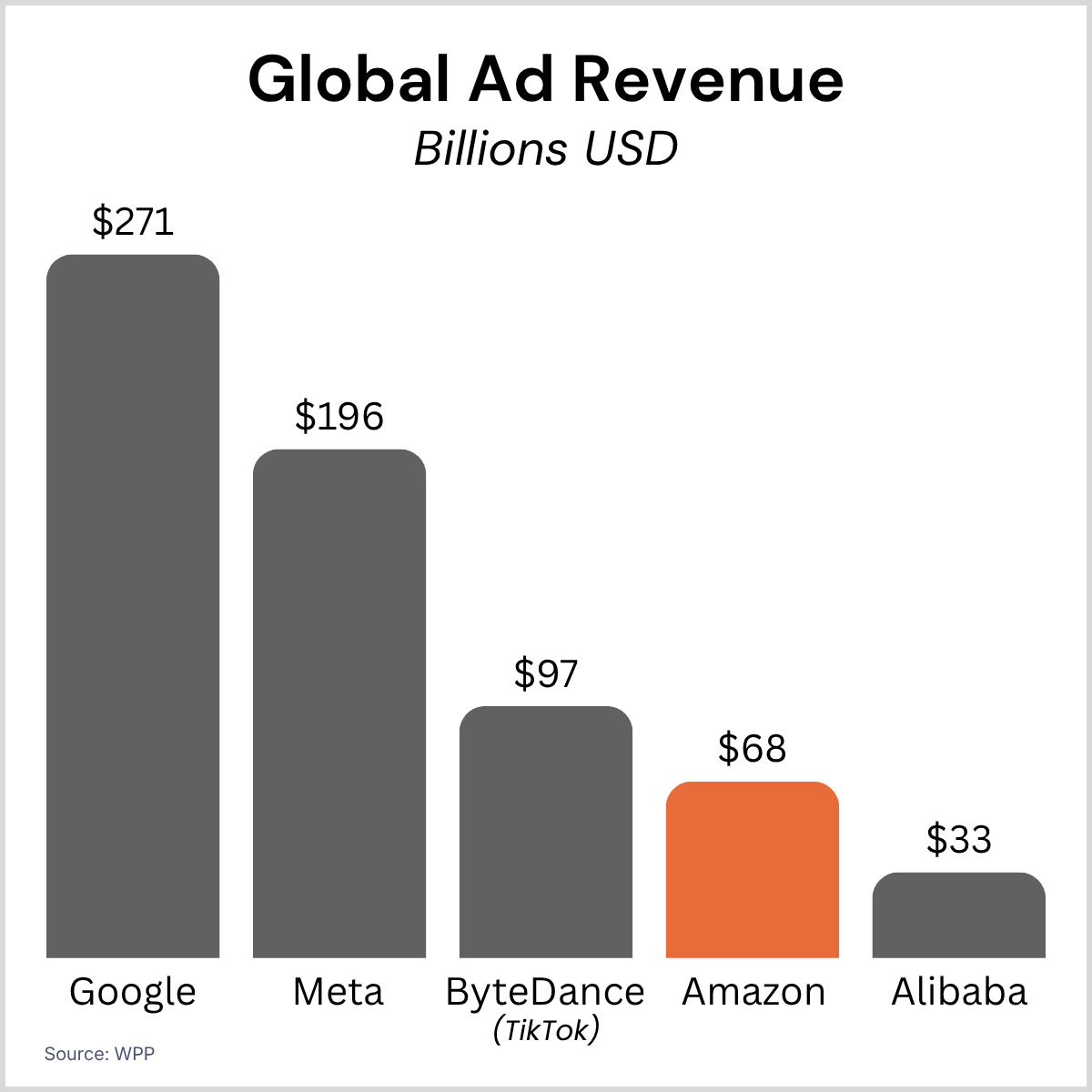
But its most lucrative business is selling ads, which reeled in $68 billion last year and trails only Google, Meta and ByteDance (TikTok) globally. Analysts speculate its core retail business is unprofitable without ads.
Amazon is also the West’s biggest marketplace, with over 60% of its sales coming from third parties. It takes a cut of every sale and offers add-on services like financing and shipping.
Advertising and marketplace are a profit flywheel for Amazon: third-party sellers buy ads to compete with established brands, and brands buy ads to fight them off. The bidding war cycles until one side blinks.
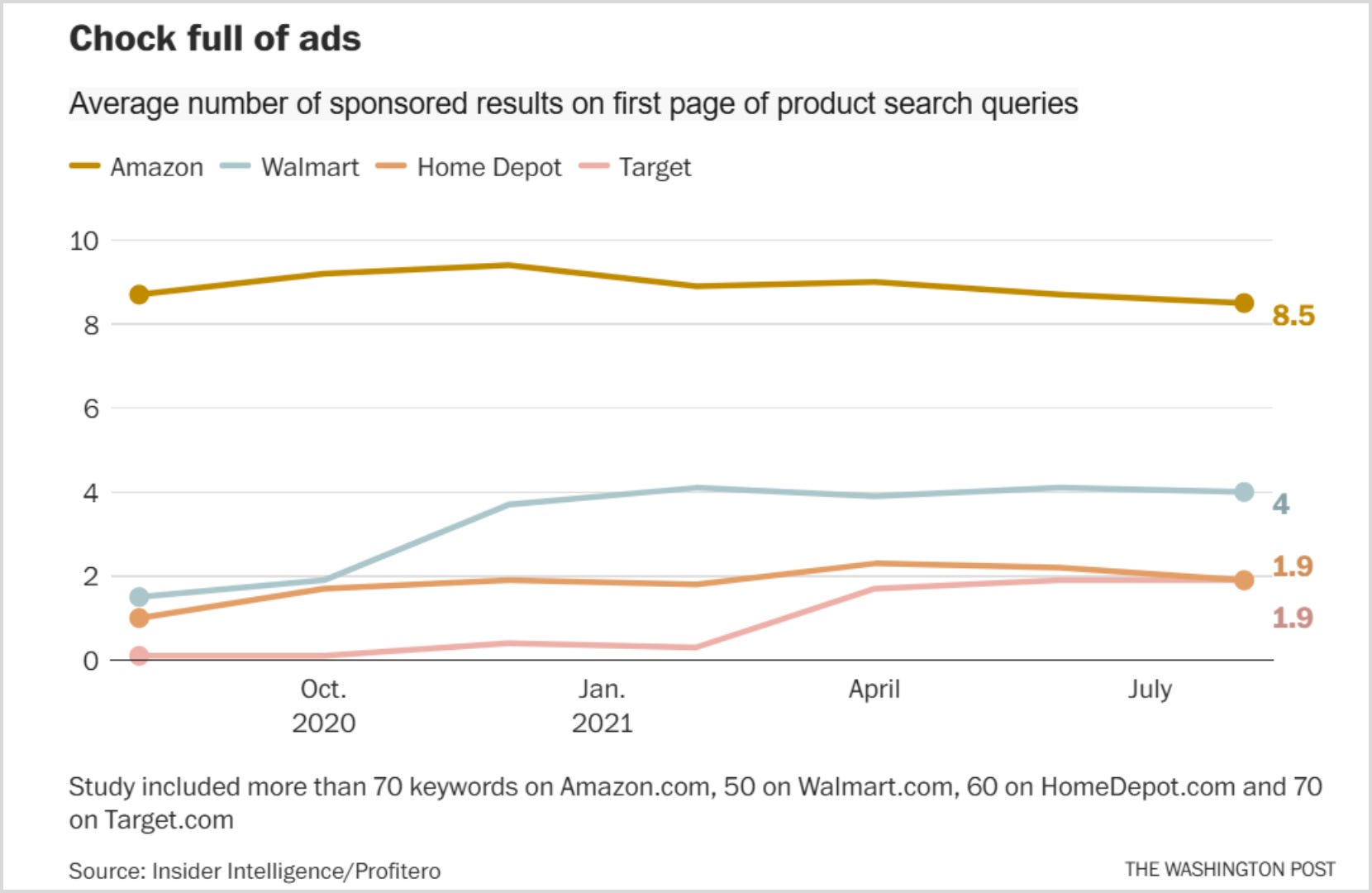
This flywheel is a money-printing machine for Amazon, and ads are everywhere on its site because of it. Product search results average over eight ads per page, and the top two to five items are always ads.
Amazon slams the door on ChatGPT
ChatGPT threatens Amazon in two ways.
Today, shoppers research on ChatGPT and then buy on Amazon. That slows its flywheel because half of AI shoppers arrive knowing what they want instead of browsing through pages of ads.
Tomorrow, shoppers might buy in ChatGPT without visiting Amazon at all. That breaks the flywheel: no ads, no “customers also bought,” no product insurance add-ons.
Amazon faces this today with Google and its billion shopping searches a day. I saw this movie over and over when I worked there. Amazon spent billions on Google ads, but only because they had to, and every so often they would turn them off without telling us why. A year ago they pulled all their shopping ads, and are still dark in the US.
Amazon is playing the same game with AI.
Last October, CEO Andy Jassy said Amazon was “very excited” about agentic commerce and joined Google’s Universal Commerce Protocol Tech Council to help build it.
But while Jassy was publicly hailing collaboration, his team was sabotaging it. Amazon blocked OpenAI from accessing its listings and sued Perplexity for building agents that bought on Amazon, even when shoppers used their own accounts.
Six months later, Jassy said AI shopping agents “lacked accurate information, personalization and shopping history,” and predicted customers would start with Alexa. It even launched a “Buy for Me” agent that buys from other retailers inside Alexa. Amazon can shop other retailers but AIs can’t shop Amazon.
That’s like locking the door to the library and complaining that kids these days don’t read.
Walmart at the gates
ChatGPT shopping is a blip today, making up less than 0.2% of all retailer site traffic. And even with its crawlers blocked, ChatGPT sends over half of its referrals to Amazon. As long as it stays that way, Amazon will keep its walls up.
Outside the castle is Walmart, the world’s biggest retailer by revenue. It sells ads too, but less than a tenth of what Amazon does.
Walmart has opened its website to AI agents, and is partnering with OpenAI to link accounts, loyalty programs and payments directly in ChatGPT. This should be a winning move: Walmart has rock-bottom prices and AI agents have the patience to price-check every single item in a shopper’s cart.
If Amazon starts losing to Walmart, it will have no choice but to lower the drawbridge.
A short honeymoon
Remember Amazon’s wonder years? It wasn’t making money then. It spent every dollar on building shipping, Prime and AWS. It didn’t turn a consistent profit until 2015.
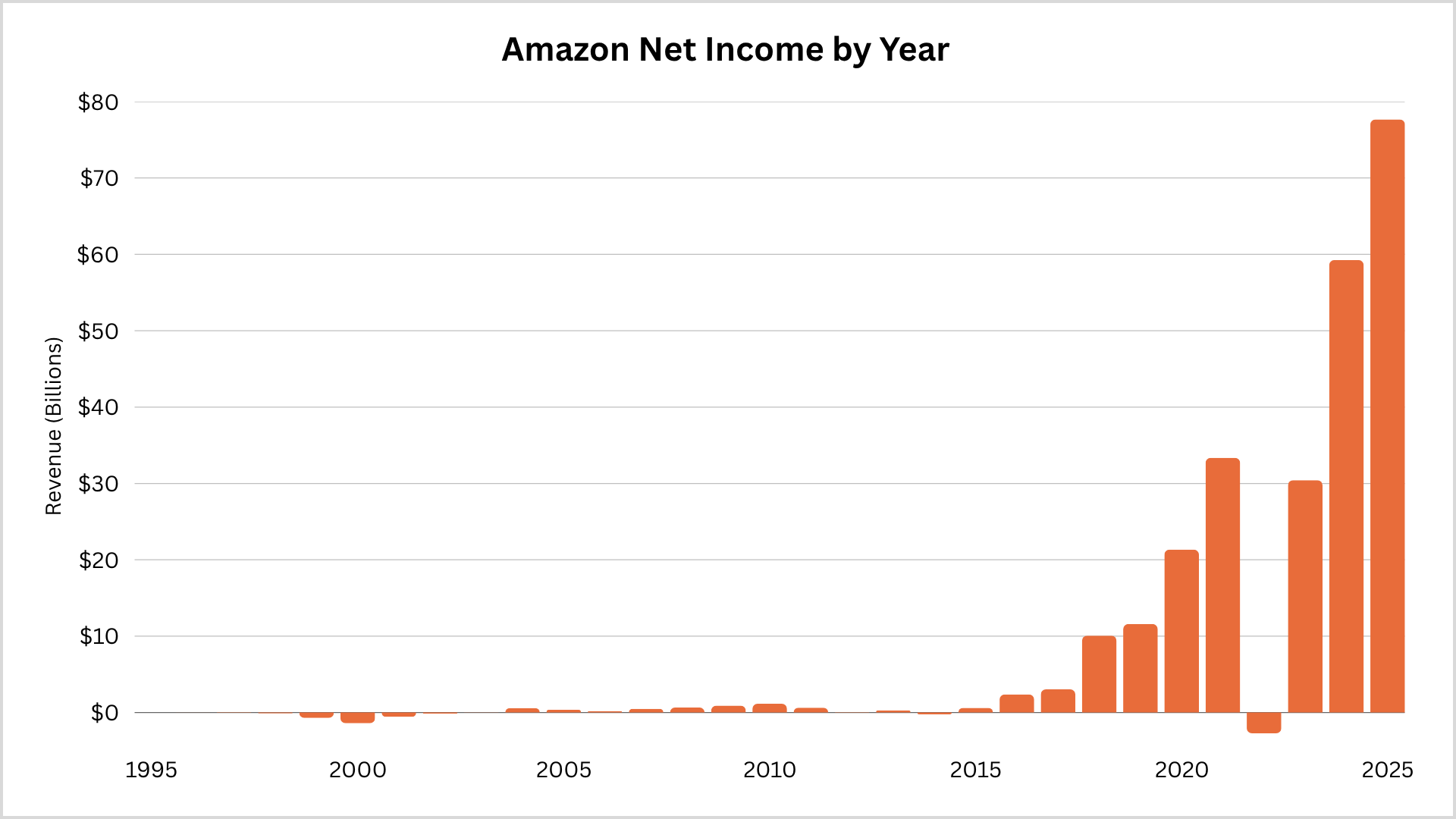
Our delight was a subsidy paid by Amazon’s investors to help it win market share. And Prime delivery is still a revelation. It’s the storefront that’s been auctioned off.
OpenAI is today’s Amazon. Last year it lost $8 billion chasing user growth, and investors are footing the bill for its cheap, ad-free answers. But OpenAI will need to make money too, and investors won’t wait two decades like they did with Amazon. Ads have already arrived in ChatGPT, along with a promise that they won’t affect its answers.
We might not even notice if they do. Amazon didn’t go from zero to eight ads per page overnight. It happened over years, one ad at a time, until the website we loved became a billboard.
So let ChatGPT help you shop, and enjoy the honeymoon. Just don’t expect an announcement when it ends.
Dad Joke: What would Jeff Bezos call an online bullet store? “Ammo-zon” 😂