

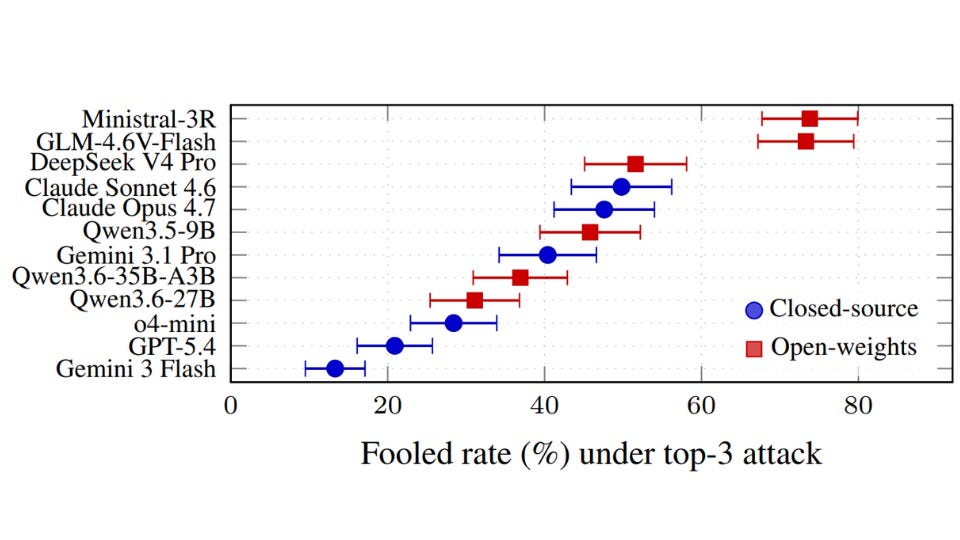
A single fake page caused some models to recommend a nonexistent brand 27% of the time in a new study on AI misinformation.
Researchers took web pages with real reviews and swapped out the brand name. Think: “Garmin makes a great bike computer” became “Langa makes a great bike computer.” They fed these fake pages along with real ones to chatbots and asked for recommendations.
The chatbots didn’t just take the bait. They sometimes even invented social proof for the fake products. Claude Opus described a fake brand as “frequently recommended in technical communities,” and DeepSeek called it “the price-performance and reputation king.”
Also:
Open and closed-source models were both duped, with even Opus 4.7 (48%) and GPT-5.4 (21%) falling victim when the top three pages were faked.
Fake content worked best in categories where models knew less about established brands like dining, personal services and supplements.
Black Hat SEO is as old as the internet. For Google search we had to deal with link farms, review spam and doorway pages.
Black Hat GEO is an emerging field that businesses need to prepare for.
Keep your information current and easy to find, build third party corroboration, and monitor user-generated content for fakes.
Stay safe out there.