

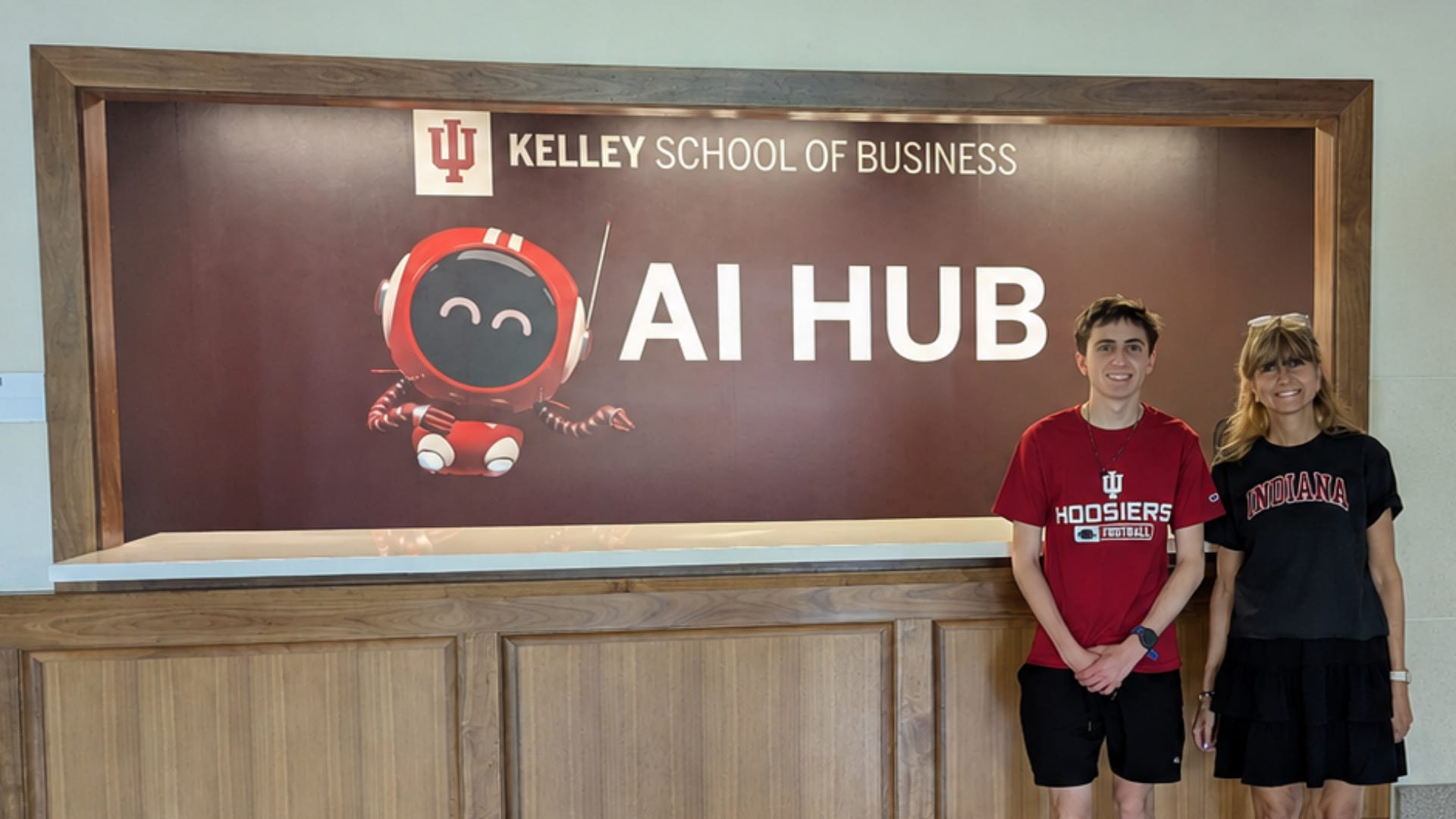
On Friday we dropped my son Grant off in Bloomington, where he’ll be a freshman at Indiana University. This letter is for him, the class of 2030, and their nervous parents.
Grant,
In May you sat with us in the audience at your sister’s graduation. When the speaker mentioned AI, a chorus of boos rained down.
It’s not hard to see why. For the first time on record, new college graduates are more likely to be unemployed than the average American worker. Hiring for workers 22 to 25 heavily exposed to AI is down as much as 19%.
As AI makes workers more productive and eats the grunt work new hires once toiled away at, companies are choosing not to hire 20-somethings instead of firing 40-somethings.
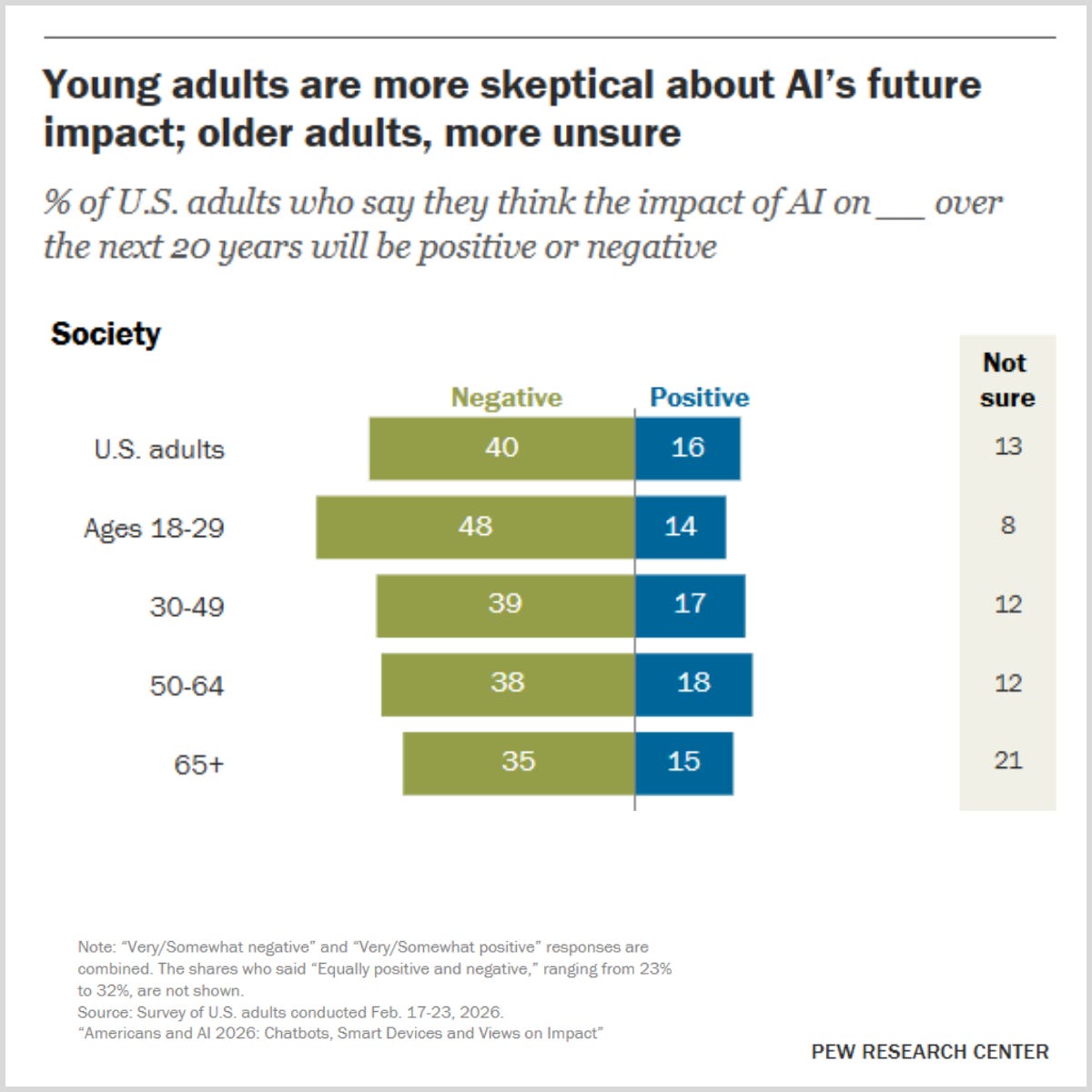
Almost half of adults under 30 think AI will have a negative impact on society. Only 14% are optimistic. This is weird. New technology has always belonged to youth. Us olds would ask our kids to set the VCR clock, fix the printer, and explain “The Cloud.”
Students at Wisconsin have asked me for advice a hundred times. A hundred times I’ve said to become “AI-native.”
That advice sucks.
First of all, AI isn’t really that hard to use! You just…drumroll…ask it a question. Second, it’s unhelpful because young folks already lead in AI adoption.
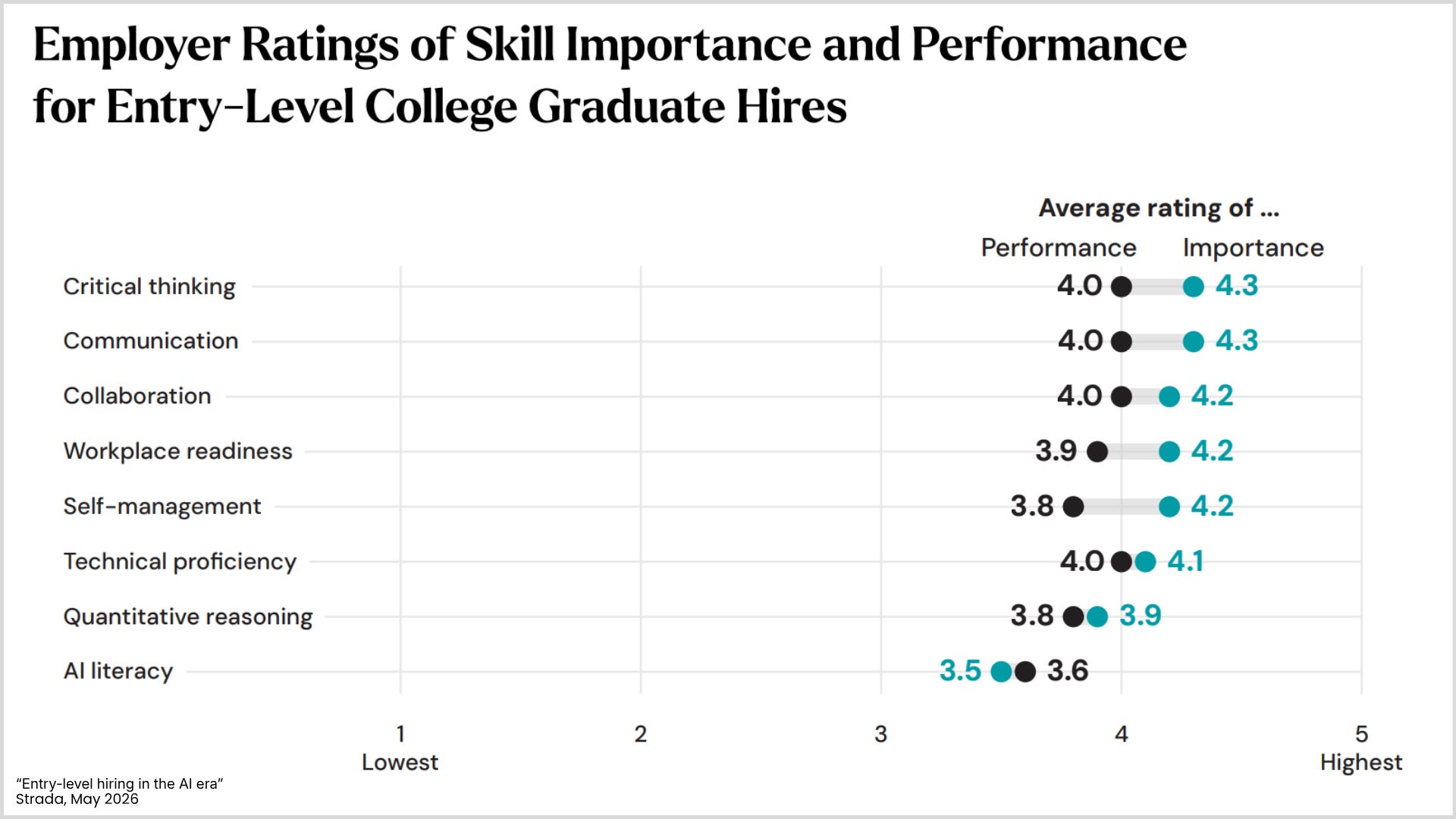
Most of all, companies aren’t hiring people based on how well they can write a ChatGPT prompt. Employers were asked to rank the skills in college graduate hires. AI literacy came in dead last, behind critical thinking, communication, collaboration and self-management.
Here’s some better advice: Stop using AI. There, I said it.
AI stunts your learning. In a 2025 experiment, researchers split up 120 college students, giving half access to ChatGPT. 45 days later, they gave everyone a surprise exam. Students with AI scored 11 points worse than those without. Study after study has found similar results.
Homework is dumb. It’s always been dumb. Millions of students have written essays about Hamlet. None of them would win a Pulitzer, but that isn’t the point. Homework is deliberately inefficient: the essay forces you to bring an argument to life with your own words. Every time you let a chatbot write for you, you short-circuit that process. In an MIT experiment, students writing with ChatGPT couldn’t quote their own essays minutes after submitting them.
Obviously you won’t quit AI cold turkey; many professors will even assign it. Just don’t ask them for the answer. Students with AI “tutors” that coached them instead of giving answers didn’t fall behind the way their peers with chatbots did.
Side note: Cut your teachers some slack. We’re redesigning homework one semester at a time. I left my last AI strategy class with two pages of things to fix.
You will use AI at work, a lot. But using AI well isn’t a technical skill. It’s knowing what questions to ask, how to ask them and how to check its work.
Anyone can tell ChatGPT to “Create a marketing brief for Nike’s new running shoe.” Someone who can say “Create a marketing brief for Nike’s AlphaFly 4 running shoe. It costs $400 and the US launch will be at this fall’s Chicago marathon,” will get something an agency can actually work from.
Doing that means you need to learn, well, marketing. Your intro class will teach you the four P’s: Product, Price, Promotion and Place, along with how to use them to position the AlphaFly against Adidas.
Now let’s say you’re running the campaign. That means tackling a zillion real-world details: Runner’s World is writing a feature on our star athlete in September. Hoka is also launching their new shoe in October. Focus group members are digging the word “supershoes.” Your agency is offering an exclusive with three new influencers. Oh, and your CMO has her heart set on winning marketer of the year.
Paste all of that into ChatGPT and it will pump out a plan that faithfully covers every single detail. But it won’t know those influencers peaked two years ago, your chief merchant hates the word “supershoes,” and your CMO has extra budget she needs to spend before August ends. That’s your job.
Sorting this out means talking to a zillion people and deciding what’s important. Economists call it messy work, and it requires skills beyond knowledge: Judgment. Taste. Courage. Curiosity. Resilience. AI is terrible at messy jobs because they’re different every time.
Your classes are important, but it’s outside the classroom where you learn to sort out the mess. The group project where two members want an A and one just wants to pass. The roommate who stays up until 2AM when you go to bed at 10. The Thursday evening with a club meeting, a party and a study group all at the same time. The TA who ghosts your email asking for help.
So go to your classes, but do the other stuff: Join clubs, go to parties, stay up late.
One final word before I go. Four years is a gift.
This weekend was all analog: Finding the dining hall. Learning the laundry schedule. Wrangling your dorm’s keyless entry. Meeting your RA. AI was nowhere.
AI has turned the world upside down in the last four years. The world will change even more during the next four. You get to watch it happen from Bloomington.
These four years will be about a lot more than AI: making friends, football games, dumb arguments, falling in love, getting into trouble. (Don’t tell Mom 🤫)
That’s called “growing up.” It’s your main job over the next four years.
Enjoy it.
Dad Joke: What do you call a first-year student spending too much time in the bathroom? A Flush-man. 😂
Love this, Matt. We need more leaders in the AI space like yourself to share this same message