

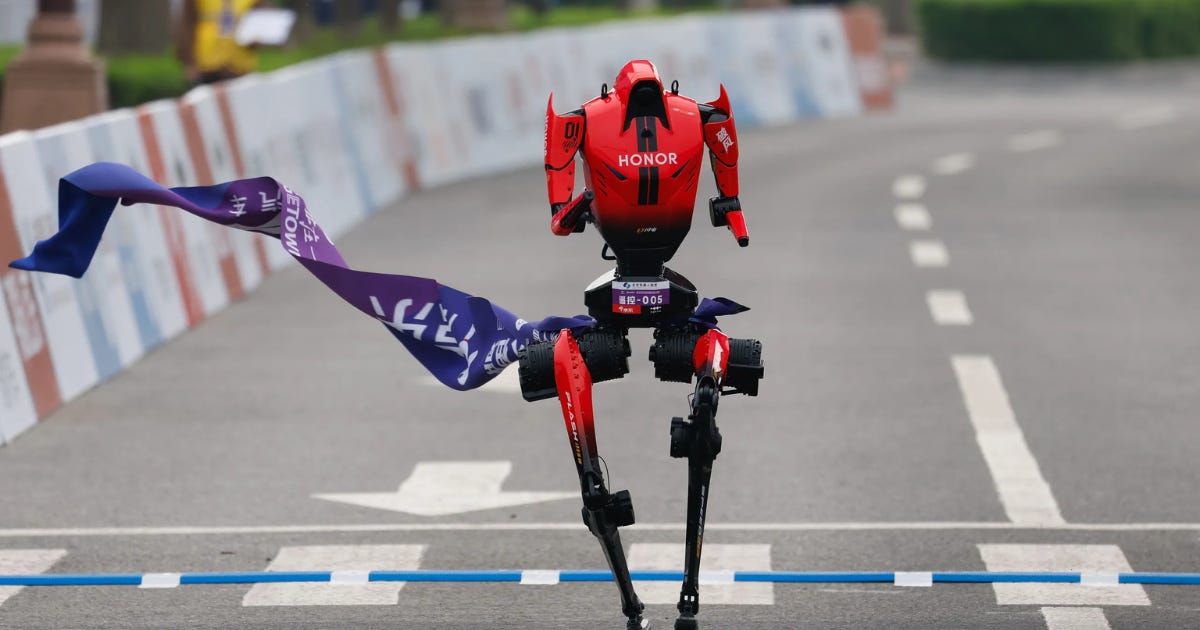
Last week a robot ran a half-marathon faster than the world record. It had its own course, battery pit stops, and human helpers, but still finished six minutes ahead.
AI now diagnoses cancers that human radiologists miss, forecasts weather better than meteorologists, and sets bail with less bias than judges. In business, AI makes better hiring decisions, underwrites loans more profitably, and reviews contracts more accurately than humans.
The obvious question leaders ask: If AI is better, should I cut the humans out of the process? This makes sense. It drives bottom-line savings and plays great on earnings calls.
But that advantage won’t last. The AI you’re replacing people with is the same one your competitor will roll out next quarter.
In a world where everyone has the same AI, the better question is: what should humans be doing that AI can’t?
Research is answering that question, and Walmart is making it real.
The easy answers aren’t the best ones
Conventional takes on humans working with AI sound smart but rarely hold up.
Use AI for routine tasks, and humans for creative ones. Sometimes, but AI is better than most humans at writing poetry and can’t fold laundry.
AI generates options. Humans make decisions. Maybe, but setting bail and approving credit are pure decisions, and AI beats humans at both.
AI can recommend; humans should verify. Not always. Studies in supply chain and hiring find that verifiers often make things worse, not better.
Sometimes, maybe, and not always don’t make good slogans, but they’re reality.
Dealing with that means making two design choices: what to delegate to AI and what only humans can answer.
What to delegate
If the right part isn’t on the shelf when an auto mechanic needs it, they’ll go to a competitor.
At a major auto parts retailer, inventory planners regularly override the AI’s demand forecasts when they think the AI is wrong. To test whether those overrides actually helped, researchers randomly accepted or ignored them.
Most of the time, the planners were wrong. Across 18,000 SKUs, seven out of ten overrides either reduced profits or did nothing. That’s thousands of hours of expert attention making the company poorer.
The other 30% were the opposite: profits went up by 6.8%. They fell into three groups: high-margin products, new launches, and large suppliers.
Adding human judgment to every task is like spreading peanut butter on everything. Save it for celery and apple slices.
What humans know that AI doesn’t
Predicting surgery duration is critical for hospitals. Operating rooms cost over $2,000 per hour, and bad estimates either waste capacity or delay patient care.
AI predictions were more accurate than human ones. But surgeons know things AI doesn’t, like the patient’s emotional state and family support system.
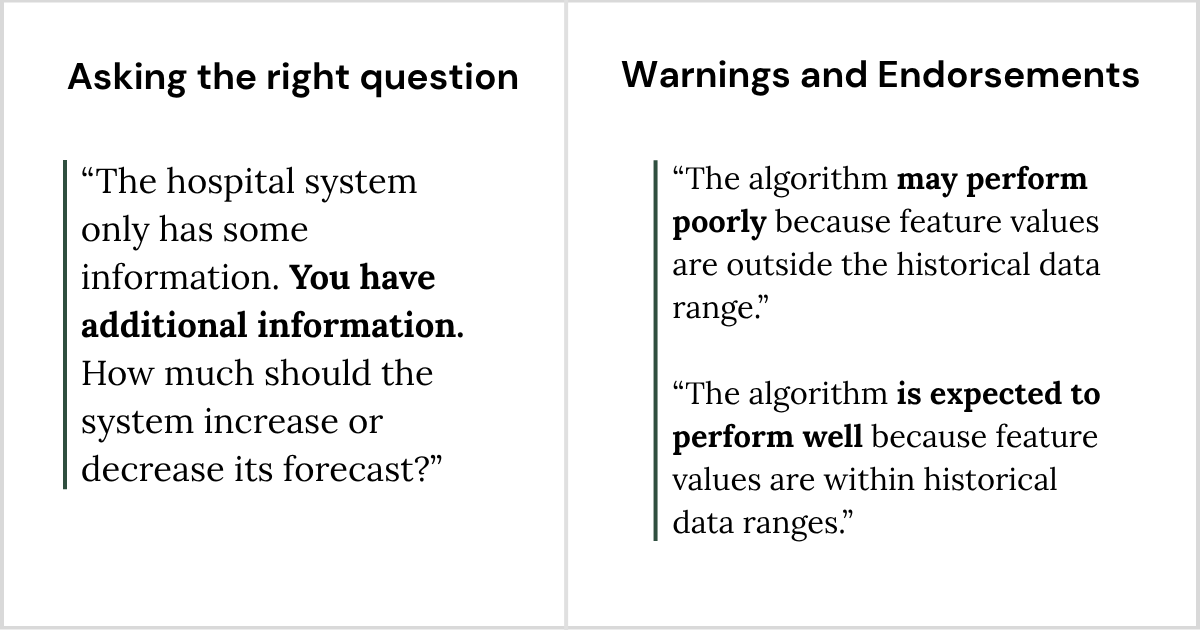
Researchers tried a different approach. Instead of asking humans to predict duration, they asked what AI was blind to. When humans flagged those blind spots, predictions improved by 21%, with the biggest gains on the most complex cases.
A second design choice helped even more. When humans were told AI was operating outside its training data, they leaned more heavily on their own judgment, and errors fell by 49%.
AI knows kids like peanut butter on celery. Humans know Johnny’s allergic to nuts.
How Walmart does it
75 million products, 10,800 stores, and $59 billion in inventory. If any company needs AI, it’s Walmart. They’ve built processes where humans and AI together beat what each could do alone. Here’s how:
Pricing: Walmart merchants delegate routine markdowns to an AI algorithm. When the AI hits incomplete data, it sets a price range and kicks the decision back to the merchant, who weighs hidden factors like brand messaging, supplier negotiations, and competitor behavior.
Waste: Walmart associates use an AI tool to manage perishables. When lettuce is about to expire, the AI flags it and suggests three options: mark it down, ship it back, or donate it. The associate, who’s holding the actual lettuce, makes the decision.
Vendor negotiations: Walmart’s buyers manage over 100,000 suppliers, too many to negotiate with personally. They deployed an AI chatbot to handle long-tail conversations within parameters set by human buyers. It closes 68% of deals within those limits. When a deal falls outside them, a buyer takes over. Three out of four suppliers prefer it to a human.
The advantage you can’t buy
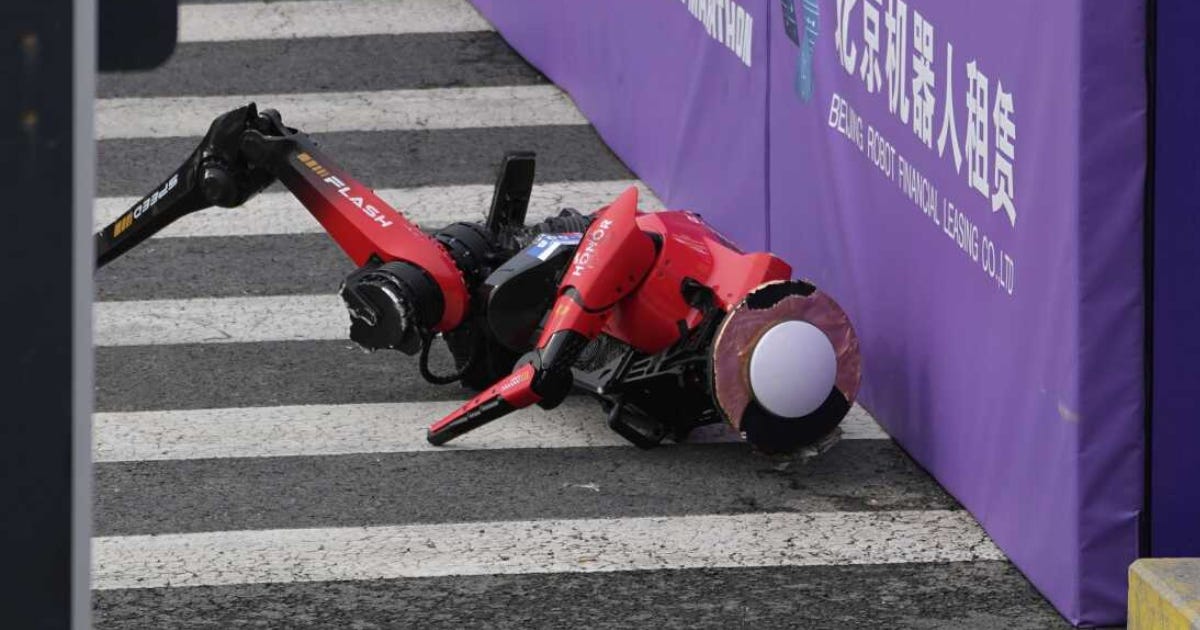
Remember that record-breaking AI robot? In the final stretch it crashed and had to be helped back up by its human builders. It still won, but humans built the course, swapped the batteries, and picked it up when it fell.
In three years, every company will have AI. The advantage won’t come from using AI but from using it well.
That means deciding what AI should do and what only humans can bring.
The companies that get this right won’t just keep pace. They’ll have an edge that others can’t buy.
Dad Joke: What did the AI robot eat for its pre-race meal? RAM-en noodles. 😂
Thanks to Jordan Tong and Tarun Kushwaha at the Wisconsin School of Business for the research this article is based on.