


Last month I built a dashboard for a restaurant CEO using Claude Code and Google Maps data. It was slick, but we ran out of time and I never showed it.
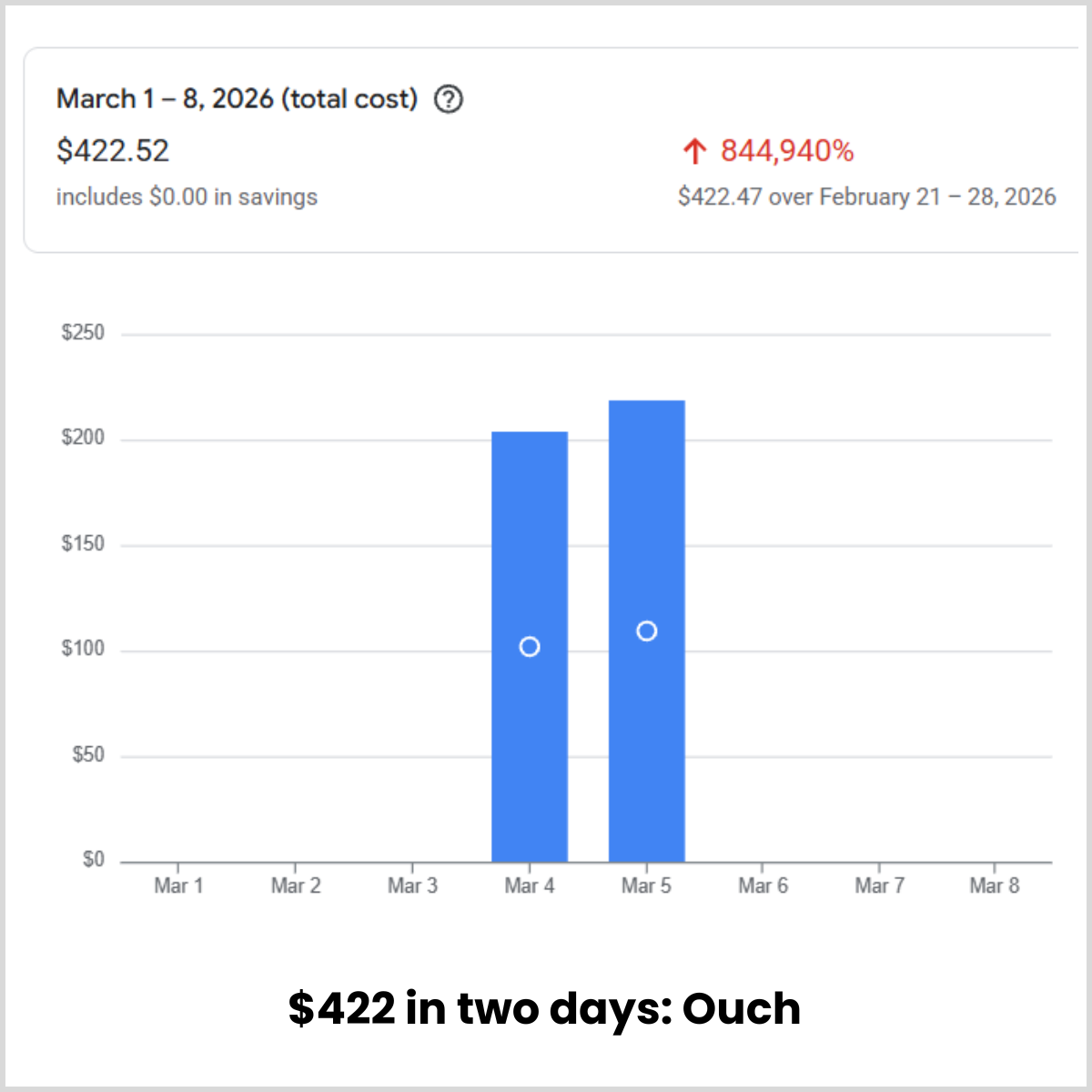
Then I got the bill. Claude had racked up $422 in Google API charges. Ouch.
That same ouch is hitting companies. Uber spent its entire 2026 AI budget in four months after deploying Claude Code, with COO Andrew Macdonald conceding “the link isn’t there yet” between spending and productivity.
Uber had joined Meta and Amazon in ranking employees by how much AI they used. The leaderboards backfired: people ran up usage just to top the charts, a habit known as “tokenmaxxing.”
Everyone loves a laugh at big tech’s expense. What’s an extra billion to Mark Zuckerberg?
But Anthropic, OpenAI and Google’s switch away from all-you-can-eat pricing is no joke.
For companies, the penny bets are gone. They’re sitting at the no-limit table now.
The meter is running
Budgeting for AI in 2025 was simple: $30 per user for Microsoft Copilot.
Then Claude Code hit. Programmers went from writing code by hand to having AI crank it out, often with multiple agents running overnight.
That’s expensive, because agents devour far more tokens than chatbots. So Anthropic and its peers split agents out from subscriptions, and billed like a utility meter instead of a flat monthly fee.
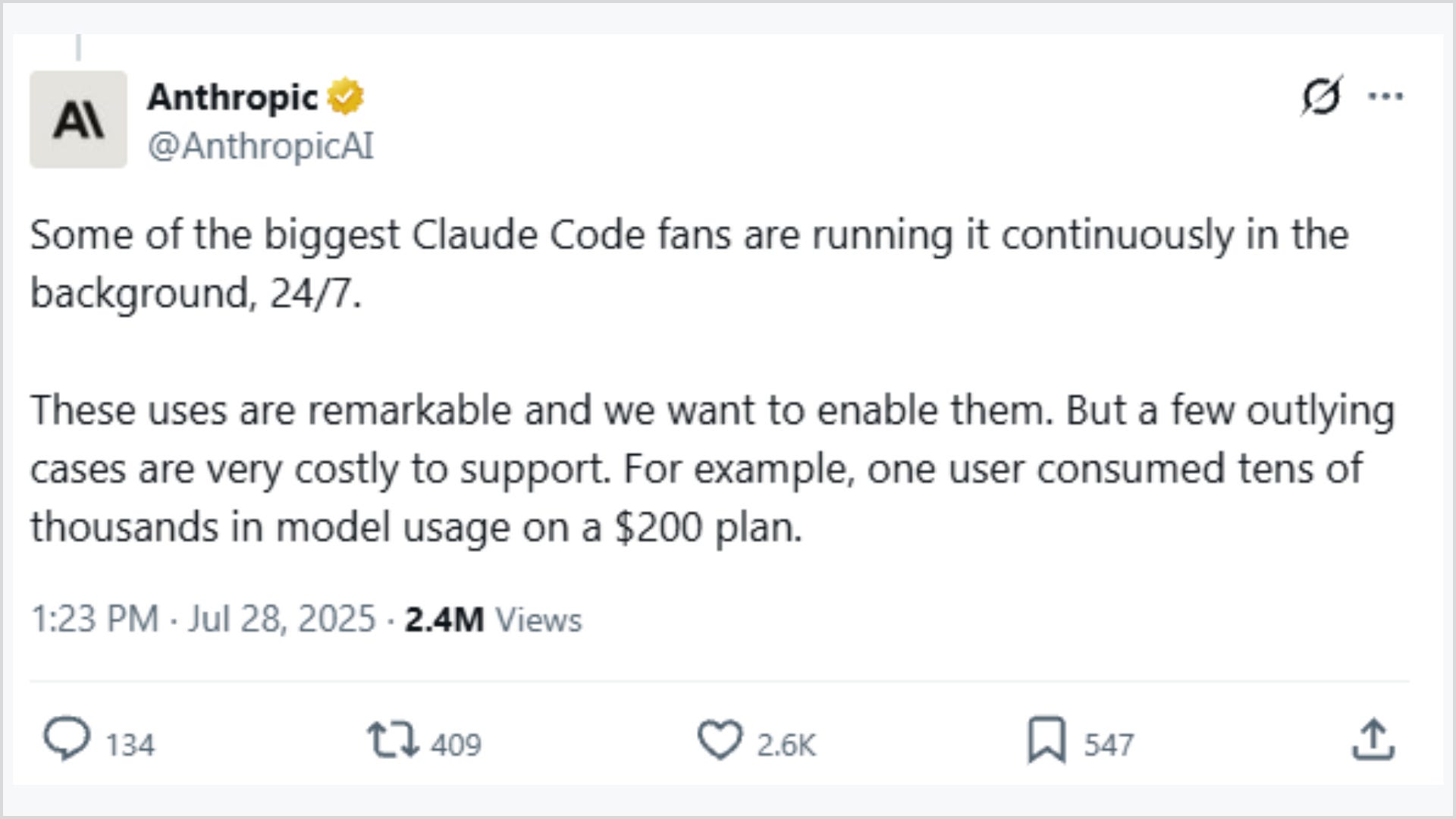
But it’s expensive for power users, some of whom ran up bills as high as $10,000 per day. One company reportedly spent $500 million in a single month on Claude Code.
“It’s like the crack-cocaine epidemic,” said Chris Reed, senior director of IT finance at Priceline. “They let you try it to get you hooked on it, and now you’re kind of beholden to it.”
Vibe coder, meet CFO
Vitaly Gordon, CEO of Faros AI, said a CTO recently told him: “One of my engineers spent $40,000 on tokens last month, and I genuinely don’t know whether I should stop him or tell everyone else to be like him.”
AI coding was a free-for-all until finance got the bill. Companies are scrambling to find the balance between value and excess.
“Tokenmaxxing” has given way to “tokenminning,” or squeezing more from each dollar. Some companies are capping spend, like Uber’s monthly limits of $1,500 per user.
Others are switching to lower-cost or open-source models that do the job for less. Companies don’t need a PhD-level researcher to route IT tickets, so why pay for the priciest model?
CTOs aren’t used to buying technology this way. Traditional IT runs RFPs, pilots, and sets budget checkpoints before spending real money.
But AI costs turn on future unknowns: how much the team uses, how fast models improve, and how much providers charge.
Which means instead of managing risk down to zero, leaders need to think in probabilities, like a poker player.
Three wins, three busts
Let’s meet three leaders playing the odds with AI.
Mark gives his dev team generous Claude Code limits.
✅Win: A year later, his superhuman coders ship three critical features months ahead of the competition.
❌Bust: Users mostly ignored the new features. He spends an extra $10 million and has to remove code he just launched.
Mary builds a contract system using an open-source Chinese model.
✅Win: A year later, she has complete control, 75% lower costs and no vendor price hikes.
❌Bust: The model gets flagged as a national security risk. Mary has to rebuild using the provider she tried to avoid.
Chet routes tier 1 support calls to AI agents instead of humans, and cuts staff by 20%.
✅Win: A year later the agents handle more calls than the old team, for less money.
❌Bust: A new product launch stumps the agents, who escalate everything to humans. Chet has to rehire the team he just cut.
This cuts against best practices of rewarding results over actions. With AI, making hedged bets should be rewarded:
If Mark’s team doesn’t launch killer features, reward him for piloting on one team before expanding.
If regulators kill Mary’s model, reward her for trying a new technology with a fast response plan.
If Chet’s agents don’t work, reward him for retaining his top talent.
Know when to hold ‘em
When I was at Google, one of my employees paid his way through college playing poker. That sounds glamorous, but it was pretty ordinary. He knew the odds, played thousands of hands, and set limits: he only went all-in when the odds tipped strongly in his favor.
With usage billing, real money is on the table. You can’t manage every unknown, but you can learn from poker players: balanced cost controls, fast experiments, multiple bets, and the discipline to scale what works.
And for leaders: judge your team on the quality of the bet, not the luck of the draw.
As every gambler knows…
Go all-in too often and you’ll lose your shirt. Fold every hand and you’ll never win.
Play it right, and you’ll walk away with more than you came in with.
Dad Joke: What do they call the bathroom at Prince Harry’s poker tournament? The Royal Flush 😆