

Last week I shared my six-week struggle with Hertz over a questionable damage report. I figured “Zendy” would make for a great case study in how not to deploy AI.
Holy smokes, did it touch a nerve. The article reached 350,000 people, and hundreds of people shared their own rental horror stories.
I even got emails from (gasp) real-life humans at both Hertz and Dollar.
So I’ve now spent more time talking about AI damage scanning than anyone on the planet who doesn’t wear a Hertz badge. Two things became clear, and one of them was a shocker.
First, AI wasn’t the villain. Hertz was. It let its chatbots make promises it didn’t keep, couldn’t explain scanner results that mirrored pre-existing damage, and cut out the humans who would have known better.
Second, damage scanning is a terrific use case for AI. Strip away Hertz’s hamfisted rollout and it fixes most of what’s broken with today’s manual inspections.
Wait, what? Hear me out.
Damage inspection sucks, but it doesn’t have to
I’ve heard countless accounts of renters being unfairly accused of damaging their cars, which often ends with “I’ll never rent from you again.”
This is partly because spotting damage is more complicated than it sounds.
An inspector has to walk around the car, tell scratches from grime, and check each one against pre-existing marks and size thresholds. If the car isn’t inspected right away, there’s no way to know if the customer caused a scratch or the lot did.
Now add the human element. Some inspectors are veterans, others are new or fill-ins, and almost all are overworked. Multiply that by millions of rentals a year, and consistency is impossible.
Implemented well, AI fixes all of this. It sees the whole car through the grime, measures dents to exact size, fires the instant a car leaves and returns to the lot, and doesn’t grade harder the morning after a fight with the kids. The result: Hertz’s AI scanners spot 5 times more damage than human reviewers.
This looks like a goldmine for Hertz, but it can benefit renters too. Instead of arguing about damage six weeks after the fact, a clean before-and-after clears you automatically.
The “It’s a rental” subsidy
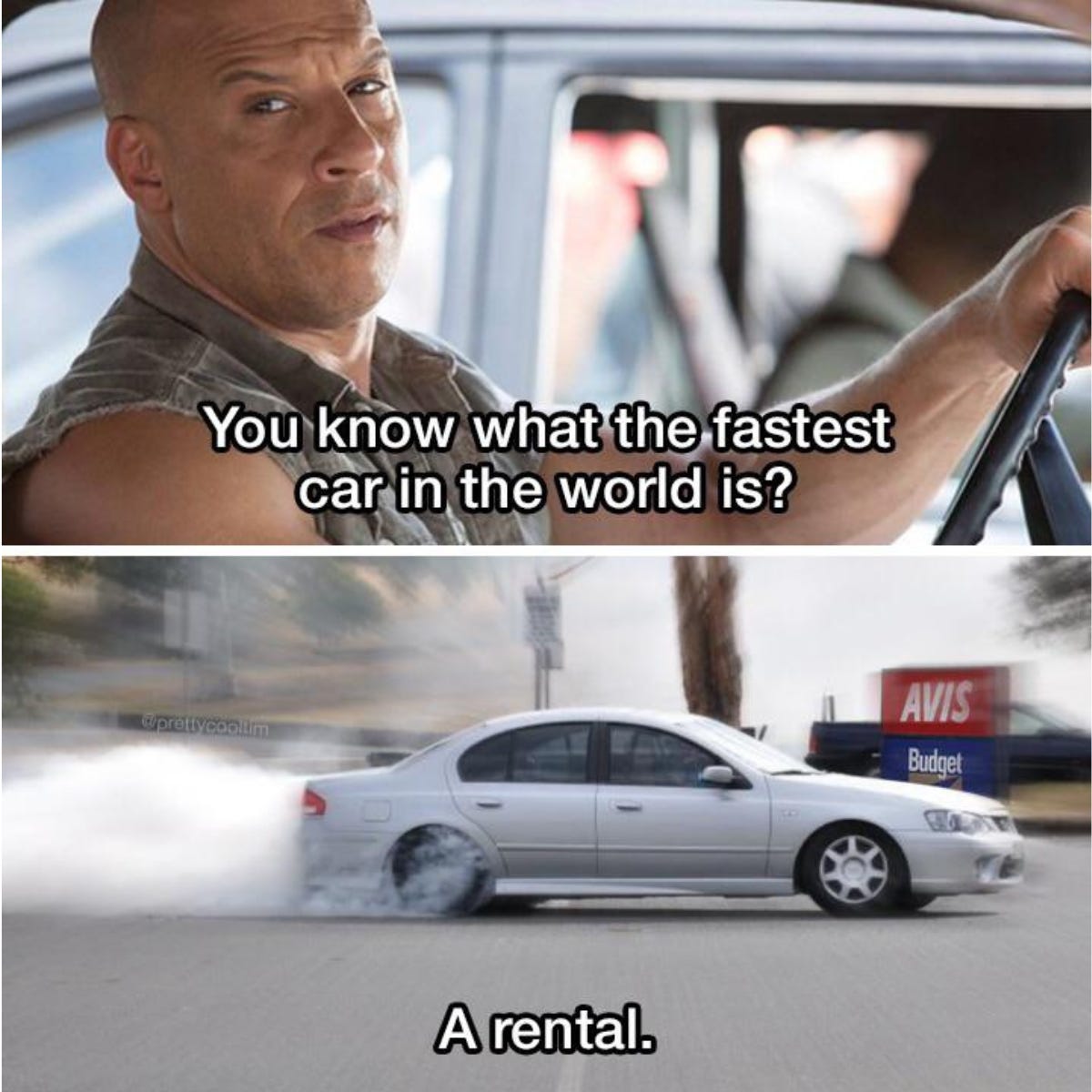
My first consulting boss was a great guy, but he drove rental cars like Brad Pitt in the F1 movie. He peeled out of intersections and flew over potholes, the louder the tires squealed the better. He’d chuck our McDonald’s trash in the back seat and laugh, “it’s a rental.” Can you imagine someone borrowing your car and treating it like that?
Driving a rental like that is fun, and it’s expensive. Used rental cars sell for 10% less than comparable models, partly because of this stigma. A rental company’s biggest cost is depreciation, and Hertz’s was $2 billion in 2025, 23% of revenue.
My boss never scratched our cars, but plenty of “it’s a rental” drivers do, and the cost of dents they leave gets passed back to renters through higher rates.
Poor damage tracking isn’t a free lunch, it’s a subsidy from the rest of us to a few Brad Pitts.
New tech, meet old habits
Companies finally have a tool that can detect damage reliably, but it’s colliding with habits that have been around for decades.
The old walk-around-with-a-clipboard process let most scratches fall through the cracks.
Hertz’s new scanners are catching them, which may explain why negative reviews mentioning damage rose from 8% to 12% last year.
If Hertz wants to stop pissing off its customers and have them treat cars like their own, it needs to do more than just deploy AI.
The email Hertz should have sent
Here’s what an email from a company that actually wants to keep its customers might look like.
Subject: Safe drivers save money with Hertz
Hello valued renter,
Hertz spends millions of dollars every year fixing damaged rental cars. When we can’t identify who caused the damage, it forces us to raise rates for everyone.
That’s why we’re rolling out ScanSafe, our program that bills drivers who cause damage instead of making everyone pay. Here’s how it works:
When you drive off the lot, a UV scanner photographs the car to record any damage. We’ll send the photos to you, so you can flag anything that looks off.
When you return, a second scanner compares the car to your original photos. If there’s no difference, you’ll get an ‘all clear.’ If something turns up, you’ll get the details and a phone number for a live agent.
We’re passing the savings on to you. Every time you return a car with a clean report, you’ll receive a $5 credit towards your next rental.
Thanks for helping Hertz keep our cars in great shape!
A win-win, if Hertz wants one
Done well, AI damage scanning is better for everyone. Hertz recoups the cost of dents. Safe drivers stop subsidizing Brad Pitts, and the maddening disputes drop for everyone.
Knowing someone’s watching even makes the F1 hopefuls think twice before peeling out.
But Hertz isn’t doing this well, as I learned the hard way from AI “Zendy.” It threw AI on top of an already-broken process, making it more maddening and more expensive.
The question isn’t whether AI scanning works. It’s whether Hertz wants to fix things for renters, or just gouge them.
If it’s the former, AI scanning could be a positive step towards reclaiming its “nobody does it better” mantle.
If it’s the latter, it’s another step towards becoming Spirit Airlines with a gotcha.
Right now, it looks like they’re choosing the gotcha.
Dad Joke: What did the renter say when AI Zendy raised their bill? “That’s so painful, it Mega-Hertz” 😂